
Top 10: Uses of AI in The Hospitality Industry
As digital innovation accelerates across hospitality, the global food, drink and accommodation sector is undergoing a significant transformation.
From real-time fraud detection and smart facility orchestration to sentiment analysis, biometric logistics and dynamic revenue management, AI is reshaping how hospitality businesses operate and serve guests.
Intelligent systems are improving safety, streamlining operations, optimising staffing and enabling data-driven decision-making across properties and platforms.
Industry leaders are leveraging these technologies to reduce costs, enhance efficiency, strengthen security and deliver more personalised guest experiences.
Food & Drink Digital highlights 10 key AI use cases redefining performance, sustainability and service quality across the global hospitality landscape.
10. Real-time fraud & risk mitigation
Companies in focus: Solink and Adyen
Solink CEO: Michael Matta
Real-time fraud & risk mitigation in hospitality leverages AI to detect threats, prevent fraud and protect transactions instantly.
Platforms like Solink analyse surveillance footage and operational data to flag suspicious activity in real time, improving visibility across properties.
Meanwhile, Adyen uses AI-driven risk management tools to assess transactions, identify anomalies and reduce payment fraud.
Together, these systems combine video intelligence and payment analytics to minimise losses, enhance security and ensure safer, seamless guest experiences.
9. Smart facility orchestration
Companies in focus: Honeywell, Schneider Electric and Travelodge
Honeywell CEO: Vimal Kapur

Smart facility orchestration uses AI-driven building management systems to optimise energy, safety and operations across hotels.
Solutions from Schneider Electric and Choice Hotels International demonstrate how EcoStruxure platforms track utilities, detect anomalies and automate controls for HVAC, lighting and emissions reporting.
Similar approaches are used by Travelodge and Honeywell to integrate sensors, predictive analytics and remote monitoring, improving efficiency, reducing costs and enhancing guest comfort while supporting sustainability goals and regulatory compliance across large property portfolios globally with scalable impact.
8. Emotional sentiment analysis
Companies in focus: Revinate, MARA and TrustYou
Revinate CEO: Bryson Koehler

AI is transforming emotional sentiment analysis by helping hospitality businesses understand guest feedback at scale.
Platforms like Revinate and TrustYou use AI to analyse reviews, surveys and messages, identifying sentiment, trends and recurring issues.
Tools such as MARA automate responses while extracting insights from guest emotions.
By processing unstructured data, AI classifies sentiment and highlights service gaps, enabling faster responses, improved communication and better decision-making.
Overall, sentiment analysis helps hospitality teams enhance guest satisfaction, strengthen reputation and deliver more personalised, data-driven experiences consistently.
7. Biometric logistics
Companies in focus: Amazon one and CLEAR
Amazon CEO: Andy Jassy

AI is transforming biometric logistics by enabling secure, contactless identification across hospitality and travel environments.
Systems like Amazon One’s use of AI-powered palm recognition and synthetic data to verify identity for payments, entry and loyalty services.
Similarly, CLEAR provides biometric authentication for fast, document-free access in airports and venues.
These AI systems improve accuracy, detect fraud and operate at scale while protecting user privacy.
Overall, biometric logistics reduces friction, speeds up guest journeys, enhances security and supports seamless, touch-free experiences across hospitality operations.
6. Hyper-localised revenue management
Companies in focus: Lighthouse, PriceLabs and Boom
Lighthouse CEO: Sean Fitzpatrick
AI is reshaping revenue management in hospitality by enabling dynamic pricing that responds to demand, occupancy and competitor rates.
Platforms like PriceLabs analyse market signals and booking data to recommend optimal room rates, helping independent hotels maximise revenue while maintaining occupancy.
AI tools automate repetitive pricing decisions, saving time and reducing manual work.
Solutions such as Boom and Lighthouse combine forecasting, benchmarking and analytics to deliver real-time insights.
By learning from historical and live data, AI improves pricing accuracy and helps hospitality businesses adapt quickly to market changes, optimise revenue and make more informed decisions efficiently.
5. Automated labour scheduling
Companies in focus: 7shifts, Connecteam and Alkimii
7shifts CEO: Jordan Boesch
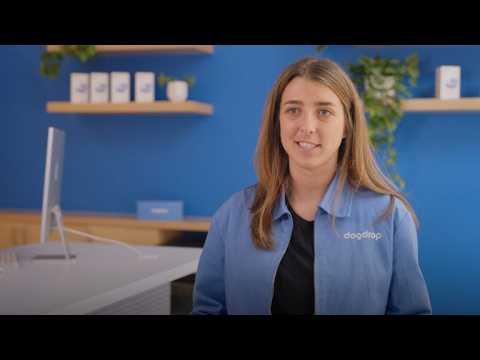
AI is transforming labour scheduling in hospitality by helping managers build efficient rotas based on demand, availability and labour costs.
Platforms like 7shifts use AI to optimise staffing and reduce overtime.
Tools such as Connecteam support scheduling and team coordination, while Alkimii uses AI-driven insights for workforce planning and operations.
By analysing historical and real-time data, AI anticipates busy periods and adjusts staffing accordingly.
These systems integrate scheduling, communication and tracking, reducing manual errors, saving time, lowering costs and ensuring consistent service quality across hospitality environments.
4. Multimodal guest assistants
Companies in focus: SABA Hospitality and PolyAI
PolyAI CEO: Nikola Mrkšić
AI-powered multimodal guest assistants are transforming hospitality by combining text, voice and contextual data to deliver seamless support.
Solutions from SABA Hospitality automate repetitive queries such as Wi-Fi access, bookings and check-out times, freeing staff to focus on guest experience.
Conversational AI platforms like PolyAI handle reservations and service requests through natural dialogue.
These assistants provide multilingual, real-time responses, improve consistency across properties, enable upselling and enhance operational efficiency while ensuring guests receive fast, personalised support throughout their stay.
3. Dynamic menu orchestration
Companies in focus: InnovOrder and Presto
InnovOrder CEO: Jérôme Varnier
AI is enabling dynamic menu orchestration by allowing restaurants to adapt menus in real time based on demand, inventory and customer preferences.
Platforms like InnovOrder use AI-driven ecosystems to integrate ordering, kitchen operations and analytics, helping restaurateurs adjust menus, pricing and promotions across locations.
This improves consistency while supporting food and drink service efficiency.
AI can analyse sales trends, ingredient availability and customer behaviour to promote high-performing dishes or suggest alternatives when stock is limited.
Companies such as Presto apply AI in ordering environments like drive-thrus, enabling menus to respond intelligently to customer interactions.
Overall, AI-driven menu orchestration reduces waste, improves margins and ensures guests receive relevant, personalised options aligned with real-time operational conditions.
2. Predictive supply chain & food waste
Companies in focus: Fullsoon, Toast, winnow and Inpulse.
Fullsoon CEO: Hassan-Ali Chaudhary

Food waste remains one of the most persistent challenges in hospitality, impacting both sustainability and profitability.
AI is helping address this issue by improving forecasting, inventory control and procurement decisions across kitchens and supply chains.
Platforms such as Fullsoon, backed by Accor Group, use predictive analytics and carbon tracking to help restaurants anticipate demand, optimise ordering and reduce unnecessary waste.
Similarly, Inpulse provides AI-driven tools for forecasting sales, automating orders and managing stock and production in real time, enabling tighter control over food costs and inventory.
Winnow applies AI to measure and analyse kitchen waste, identifying where losses occur so teams can take targeted action to reduce overproduction.
Toast also leverages AI-powered insights to help restaurants benchmark performance, improve purchasing decisions and streamline operations.
Together, these AI systems enhance predictive supply chain management by reducing guesswork, aligning supply with demand and minimising waste.
This leads to more efficient kitchens, lower environmental impact and improved margins across hospitality operations.
1. Unified agentic discovery
Companies in focus: Google (Gemini AI Mode), Airbnb, Radisson Hotel Group, IHG Hotels & Resorts and GetYourGuide
Google CEO: Sundar Pichai

AI is driving digital transformation across the hospitality sector by enabling more connected, intelligent and personalised discovery experiences.
Platforms such as GetYourGuide and Airbnb use AI to consolidate customer feedback, bookings and behavioural signals into unified insights that help tailor services, including food and drink preferences.
Advanced systems like Google Cloud and Google Gemini enhance this process through multimodal understanding, allowing businesses to interpret text, images and video together.
This supports richer recommendations, such as suggesting restaurants, local cuisines, or curated dining experiences aligned with user interests.
Companies like Radisson Hotel Group and IHG Hotels & Resorts apply AI to personalise marketing and guest journeys, integrating food and beverage options into travel planning.
Through agentic AI, systems can not only analyse but also act autonomously, automating bookings, customer support and inventory decisions.
This unified approach improves efficiency, reduces food waste and delivers seamless, context-aware guest experiences at scale.
Company portals















Executives
Andy Jassy
President and CEO

Bryson Koehler
CEO

Hassan-Ali Chaudhary
CEO and Founder

Jérôme Varnier
CEO and Co-Founder

Jordan Boesch
CEO

Michael Matta
CEO and Co-Founder

Nikola Mrkšić
CEO

Sean Fitzpatrick
CEO
Sundar Pichai
CEO
Vimal Kapur
Chairman and Chief Executive Officer