
The European Council’s Biocide Reduction Law For Food Safety
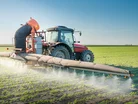
According to the European Council (ECo), it has given the final green light to target changes to the European Union’s (EU) biocides rules, extending certain data protection periods as part of the “Omnibus X” simplification package.
For the food and drink sector, where disinfectants, sanitisers and pest-control products are indispensable to safe production, this move aims to cut red tape without relaxing Europe’s strict standards for food and feed safety, health and environmental protection.
The ECo notes that the update aligns regulatory timelines to give businesses certainty while a full evaluation of the biocides framework proceeds in 2026–2027.

Biocides in agriculture and food manufacturing
According to the EU, biocidal products are substances used to control unwanted organisms that can harm human or animal health, damage the environment or interfere with human activities; these include pests such as insects and rodents, as well as microorganisms like bacteria, viruses and moulds.
In agriculture and food manufacturing, this involves the use of biocides as disinfectants, preservatives and pest-control agents to maintain hygiene in environments where food is grown, processed, stored and prepared.
The European Food Safety Authority (EFSA) further explains that in food safety contexts, biocides are used to control harmful microorganisms and pests in food-related settings such as processing plants, kitchens, storage facilities and on equipment, helping prevent contamination throughout the food chain.
The EFSA evaluates these substances to ensure whether they do or do not pose risks to human health or the environment, focusing on their toxicity and potential exposure pathways.
This scientific risk assessment supports EU regulatory decisions and helps to balance effective hygiene control in agriculture and food production with the protection of consumers and environmental safety.
What this means for food and drink
The ECo explains that, due to delays in reviewing existing active substances, data protection that would have lapsed at the end of 2025 is now aligned with the extended review programme until 31 December 2030.
“The law adopted today (11 May 2026) demonstrates that targeted amendments can deliver significant results for our industries,” says Marilena Raouna, Deputy Minister for European Affairs of the Republic of Cyprus.
“By extending certain data protection periods, we ensure fair treatment for companies while safeguarding fair competition within the internal market, in view of the upcoming full evaluation of EU rules on biocides.
“This represents another concrete deliverable of the Cyprus presidency under the simplification agenda, which remains a central priority of our work.”
This continuity supports stable access to hygiene-critical biocidal products while maintaining the EU’s strict protection standards.
Companies using regenerative agriculture
Major global food companies are increasingly adopting regenerative agriculture as part of their food system strategies, with the shared aim of improving soil health, biodiversity, water management and climate resilience while also reducing reliance on synthetic inputs.
Companies such as Unilever, Danone and Nestlé are investing in large-scale regenerative programs that support farmers in transitioning to practices like crop rotation, reduced tillage, cover cropping and agroforestry, all of which enhance ecosystem stability and farm productivity.
“The focus is on supporting, training and providing financial support to suppliers and farmers and ramping up initiatives,” says Pascal Chapot, Group Head of Sustainable Agriculture Development, Nestlé.
“It’s all part of our commitment to advance regenerative agriculture.”
These approaches are closely linked to reducing the need for biocides, such as chemical pesticides, fungicides and disinfectants.
The companies all highlight that healthier soils and more diverse farming systems naturally strengthen pest resistance, improve plant resilience and encourage biological pest control.
As regenerative systems reduce pest pressure and improve environmental balance, they can lower dependency on chemical biocidal products used in conventional agriculture and food production environments.
Similarly, Danone and Nestlé emphasise that improving soil health and biodiversity helps reduce chemical inputs while increasing farm resilience and long-term productivity.
Across these companies, regenerative agriculture is therefore positioned not only as a climate and sustainability strategy but also as a pathway toward safer, lower-input food systems where fewer biocides are needed due to improved natural ecosystem functioning.
Company portals





Executives

Marilena Raouna
Deputy Minister for European affairs of the Republic of Cyprus

Pascal Chapot
Group Head of Sustainable Agriculture Development