
PepsiCo: Sustainable Fertilisers for Potato & Corn Farming

A new partnership between PepsiCo and Fertiberia could transform how ingredients for popular snack brands are grown across Europe.
The collaboration focuses on replacing conventional fertilisers with green hydrogen-based alternatives across farmland that supplies potatoes and corn for products including Lay's, Doritos and Cheetos.
According to the companies, the initiative will eventually cover 400,000 acres and support more than 1,500 farmers.

Low-carbon fertiliser at scale
Fertiberia will supply up to 136,000 tonnes of its Impact Zero fertiliser to PepsiCo annually by 2030.
The product uses green hydrogen instead of natural gas in its production process, marking a significant shift in how ingredients for major snack brands are cultivated.
According to Fertiberia, this switch reduces GHG emissions by up to 63% compared to traditional fertiliser manufacturing.
The Impact Zero range also incorporates slow-release formulas and biological inhibitors designed to improve nutrient retention in soil while minimising environmental impact.
The arrangement builds on a trial conducted in Spain and Portugal.
According to the companies, that pilot programme cut emissions by up to 20% in corn farming and up to 15% in potato cultivation, demonstrating measurable results at field level.
The fertiliser will be used on crops including potatoes, corn, sunflower, sugar beet and rapeseed.
These ingredients feed into production lines for PepsiCo's savoury snack portfolio across multiple European markets, connecting farm-level changes directly to consumer products.
“We’re working to lead the way on regenerative agriculture and helping to build a more resilient agricultural supply chain,” says Archana Jagannathan, Chief Sustainability Officer, PepsiCo Europe, the Middle East and Africa.
“Switching to low-carbon fertiliser is one of the strongest levers we have to reduce agricultural emissions and use of digital technology can complement this journey towards food system transformation.
“We’re excited by the success of our pilot in Spain and Portugal and look forward to scaling this ambitious partnership across Europe.”
The programme launches initially in France, Romania, Serbia, Greece and Turkey.
It will also expand in Spain and Portugal, where the pilot took place. PepsiCo has indicated plans to roll out the initiative to additional European countries in coming years as farmer adoption increases.
Reducing agricultural emissions across the supply chain
When combined with existing supplier agreements, the Fertiberia collaboration could bring the proportion of low-carbon fertiliser in PepsiCo's European supply chain to around 50% by 2030.
According to global estimates, fertilisers contribute approximately 2% of total GHG emissions worldwide.
For PepsiCo, the production and use of fertiliser currently accounts for around half of the company's average potato carbon footprint in Europe.
Both companies will provide technical guidance and digital tools to participating farmers.
These include precision agriculture technologies that use data to optimise fertiliser application rates and timing.
The tools will also track implementation of regenerative agriculture practices across the participating acreage.
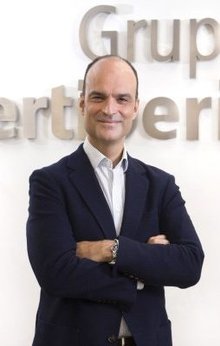
“Since 2022, we have been developing lower-carbon hydrogen-based fertilisers, powered by cutting-edge technology such as NSAFE, the world’s first bio-inhibitor of nitrification that prevents nitrogen losses and accelerates the transformation of European agriculture,” says David Herrero, Chief Operating Officer at Fertiberia.
“Today, this journey takes on greater meaning thanks to the trust of partners like PepsiCo, with whom we are collaborating to help decarbonise agri-food value chains.
“This is not just about fertilisers – it’s about demonstrating the importance of collaboration and showing that innovation, when shared, can drive both climate action and food security across Europe.”
According to PepsiCo, the collaboration supports its ambition to implement regenerative, restorative or protective practices across 10 million acres globally by 2030.
The initiative also contributes to PepsiCo's goal to reduce Scope 3 forest, land and agriculture GHG emissions by 30% by 2030, measured against a 2022 baseline.
Testing commercial viability in real farming conditions
Fertiberia has been developing lower-carbon hydrogen-based fertilisers since 2022.
The company's products include NSAFE, described as the world's first bio-inhibitor of nitrification that prevents nitrogen losses.
Herdade da Malhadinha is a farming operation in Portugal that joined the programme during its pilot phase in 2024.
In the second year, the farm fertilised 30 acres of potatoes using Impact Zero for both base and top dressing applications.
“We joined the programme during its pilot in 2024 and in our second year we've fertilised 30 acres of potatoes using Impact Zero both for base and top dressing,” says Herdade da Malhadinha, a farmer using Impact Zero fertiliser in Portugal.
“It has been a smooth process, as the fertilisation method is technically identical to our usual practice and so doesn’t alter our daily operations.
“This project with PepsiCo allows us to move towards more sustainable, low-carbon agriculture, redefining how we produce the food of the future.”
The farm noted that the fertilisation method remains technically identical to conventional practice.
This means the switch does not alter daily operations or require farmers to adopt new equipment or techniques.
The scaling of the programme into additional European markets will depend on continued adoption by farmers applying the low-carbon solutions in real field conditions.
The collaboration represents a commercial-scale test of whether green hydrogen-based fertilisers can be integrated into existing food supply chains without compromising crop yields or farm economics.
Results from the expanded programme could inform similar initiatives across other agricultural sectors in Europe and potentially influence fertiliser sourcing decisions in other global food manufacturing operations.
Company portals

Executives

Archana Jagannathan
Chief Sustainability Officer, Europe, Middle East and Africa
David Herrero
Chief Operating Officer