
How are PepsiCo & Yara Strengthening the Global Food System?
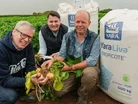
The global food system faces the dual challenge of satisfying nutritional demands while reducing its environmental footprint.
A significant proportion of global greenhouse gas emissions stems from agriculture, particularly from upstream activities such as fertiliser production and on-farm nutrient application.
Prior to the World Economic Forum's annual meeting in Davos in January 2025, PepsiCo released an update on its collaboration with Yara, a global leader in crop nutrition.

The partnership between PepsiCo and Yara began in 2024 with a long-term commitment to provide farmers with crop nutrition programmes designed to help decarbonise the food value chain.
Under the agreement, Yara would deliver 165,000 tonnes of fertiliser annually to PepsiCo, representing approximately one-quarter of its crop fertiliser requirements by 2030.
The initiative centred on integrating lower-carbon fertilisers produced from renewable sources or carbon capture and storage ammonia with soil diagnostics and data-driven nutrient management.
This methodology enables efficient nutrient use by reducing both upstream production emissions and in-field emissions, while maintaining crop yields.
Initial implementation in Europe
The first phase of the PepsiCo and Yara project was implemented across the European Union and the UK, encompassing approximately 1,000 farms and covering a total of 128,000 hectares.
Margaret Henry, Vice President of Sustainable and Regenerative Agriculture at PepsiCo, says: "We have put farmers at the centre and are helping them scale regenerative practices, reduce emissions and build resilience across agricultural communities.
"By introducing low-emission fertiliser solutions and leveraging innovation, this collaboration helps accelerate progress toward a net zero food system while supporting farmer livelihoods and strengthening food security.
"It's collaborations like this and others that demonstrate how business, government and civil society can work together to deliver systemic change."
Programme expansion into Latin America
By June 2025, PepsiCo and Yara had extended their model to Mexico, Colombia, Chile and Argentina, focusing on potato growers within PepsiCo's supply chain.
PepsiCo demonstrated the replicability of this programme in different geographies and climates, indicating its potential to transform the global food system.
The Latin American programme reflects the European version by offering lower-carbon fertilisers alongside agronomic support and digital farm monitoring.
Early projects indicated a potential for 20-40% reductions in emissions per tonne of potatoes, depending on the crop system and fertiliser used.
Benoit Lamaison, Senior Vice President for Continental Europe and Product Strategy at Yara, says: "To transform our food system, we need to collaborate across the food value chain.
"We're excited to work with first movers like PepsiCo to help make this a reality.
"Decarbonising food production will be critical to delivering on the Paris Agreement and farmers will play a key role in helping us get there."
What it means for agricultural decarbonisation
According to the International Fertiliser Association, nearly half of the food produced globally depends on mineral fertilisers.
This could mean that decarbonising this element of food production is critical for the agricultural value chain to help meet global climate goals.
Traditional fertiliser production relies on fossil feedstocks and field-level nitrogen use releases nitrous oxide.
The PepsiCo and Yara approach could bring benefits to farmers by providing them with monitoring, advice and supply chain relationships, which may help limit risk and encourage the adoption of lower-carbon fertilisers.
Jim Andrew, Chief Sustainability Officer at PepsiCo, says on LinkedIn: "Governments, businesses, financial institutions and civil society must work together, towards a common set of clear objectives, to strengthen the global food system in the face of increasing climate pressures, soil degradation, water scarcity and extreme weather events.
"The world must also realise that farmers and farming communities are essential partners in building resilience and sustainability and that any systemic change starts with them.
"These things are easy to say, but we know from our experience that they, unfortunately, do not always happen 'on the ground'."
Company portals


Executives
Benoît Lamaison
SVP Business Unit Manager Continental Europe & Product Strategy
Jim Andrew
Chief Sustainability Officer, EVP and Executive Committee member
Margaret Henry
Vice President, Sustainable & Regenerative Agriculture