
World Soil Day: Mars Calls For Agriculture Policy Support
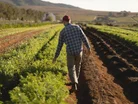
Each year, 4 December marks World Soil Day.
This year, Mars is joining with partners and farmers in Europe, calling on policymakers and scientists across Europe to enable scalable solutions that aid farmers in adopting climate-smart agriculture practices.
The collaborations could help Europe to strengthen its role in global agrifood policy, building the momentum in regenerative farming and agriculture.

Mars' sustainable partnerships
In 2024, Mars announced multiple partnerships with leading agricultural supplier and technical implementation partners to diversify Europe's farming systems, including:
- Agreena
- Biospheres
- Soil Capital and more.
Across Mars Petcare's European supply chain, more than 300 farmers have implemented climate-smart practices across more than 60,900 hectares, from using cover crops in Buckinghamshire, UK, to implementing no-till cultivation in Pomeranian Voivodeship of Poland.
"Europe's farmers play a vital role in improving soil health," says Paolo Rigamonti, Regional President Europe Pet Nutrition at Mars.
"Through regenerative techniques, they can store more carbon, improve water filtration and support local ecosystems.
"Across Europe, Mars is investing to help farmers adopt these practices - but they can't do it alone.
"We need the right conditions in place and policies that accelerate what is already working."
Monitoring regenerative progress
A year since the last major announcement, farmers say these regenerative practices have shown positive results.
"We are on heavy clay soils, which were very prone to water logging," says Antony, a farmer in South-East England in a Mars climate-smart agriculture programme.
"[Since adopting regenerative practices] we are much less concerned about water logging as infiltration rates are better and we don't worry so much about drought as water holding capacity is much improved.
"This has enabled us to operate a longer weather window, creating more field working days and reducing our labour charges accordingly."
He adds that the "crops look better and profitability is returning even in challenging years."
In response, Mars emphasises that in order to reach systemic climate-smart agriculture more collaboration is needed, especially when risks like financial risk and lack of training are common.
"Scaling regenerative agriculture across Europe demands genuine collaboration between the private sector, policymakers and farmers – especially as farmers face growing pressures," says Simon Haldrup, CEO at Agreena.
"Through Agreena's partnership with Mars, we're helping deliver the financial support and verified measurement needed to unlock real change on the ground.
"On World Soil Day, we're reminded of the power beneath our feet and Agreena echoes Mars' call for policymakers to create the enabling environment required to rapidly scale these proven practices across Europe's diverse farming landscapes."
Advancing regenerative farming
To accelerate its transformation and help farmers thrive, Mars is calling on policymakers and scientists to strengthen public policy that enables action at scale by:
- Unlocking public-private partnerships to deliver essential training, financial support and technical assistance for farmers
- Prioritising outcomes-based policies that respect regional differences and give farmers flexibility in how they achieve regenerative goals
- Measuring impact through harmonised metrics aligned with global science-based standards such as Science-Based Targets initiative (SBTi) and GHG Protocol
Izabela, a farmer in northern Poland who has received financial and technical support for regenerative practices, said her farm has benefitted from "increased water retention, which provides greater drought resistance and greater water absorption in the event of sudden heavy rains.
"We were still able to harvest this year, even though the fields were flooded after heavy rain in July.
"Policy based on the results of specific agricultural practices supports the development of agriculture and provides freedom for proper management, while strict regulations detached from real needs and weather patterns can only harm farmers, the soil and crops."
Creating conditions for scale
"Across Europe, the shift toward regenerative agriculture is progressing at uneven speeds. In countries like France, strong technical support helps farmers adopt new models, while in others, the lack of reliable local partners slows the transition," says Sébastien Roumegous, CEO at Biospheres.
"Our collaboration with Mars bridges this gap: it combines targeted financial support, robust scientific measurement and hands-on agronomic guidance that farmers can trust.
"By working together, we're creating the conditions for regenerative practices to scale consistently across diverse landscapes and ensuring soils remain a foundation of resilience for future generations."
It is suggested that farmers in Mars' climate-smart agriculture programmes need solutions that are tailored to Europe's diverse landscapes, ranging from drought adaptation to carbon sequestration.
Success requires the right support system to accelerate and scale these practices across Europe.
Norbert is a farmer in southern Hungary whose farm has been impacted by extremes of climate in recent years through prolonged dry periods.
Improving climate resilience was among his motivations for implementing regenerative practices on his farm.
Norbert says: "By abandoning rotational cultivation, the number of soil-dwelling organisms has increased significantly.
"The better soil structure and surface coverage can drain sudden rainfall faster, which usually results in a spectacular difference."
Through collaborative partnerships and a clear call to action for policymakers, scientists and industry leaders, Mars continues its focus on scaling climate-smart agriculture in its value chain, which could help to deliver more than one million acres of regenerative practices across the globe by 2030.
"At Soil Capital, our ambition is to make regenerative agriculture the norm," says Chuck de Liedekerke, CEO at Soil Capital.
"Expanding regenerative practices across Europe depends on consistent collaboration between farmers, businesses and policymakers.
"Our work with Mars rewards farmers who receive financial support because they deliver real, verified impact on the ground.
"The next step is for policymakers to put in place the framework to scale what's already working across Europe's diverse farm realities."
Mars' Net Zero Roadmap involves scaling climate-smart agriculture across its value chain, working on one of its several critical initiatives to advance its reduction in its GHG footprint.
Company portals




Executives
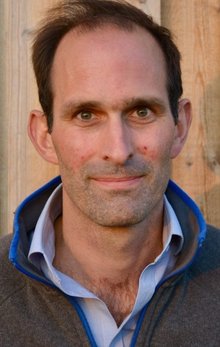
Chuck de Liedekerke
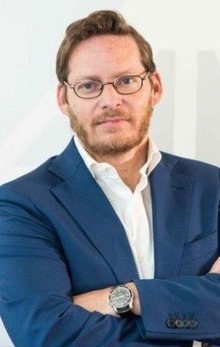
Paolo Rigamonti
Regional President Europe Pet Nutrition
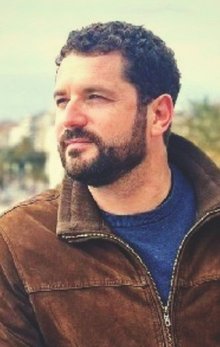
Sébastien Roumegous
CEO
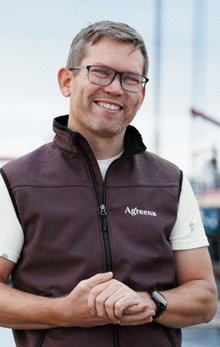
Simon Haldrup
CEO