
Top 10: Import Regulations
Food safety, sustainability and regulatory compliance are shaping the modern food industry.
From Codex Alimentarius and WTO agreements to national rules on HFSS products, food contact materials and high-risk imports, regulations ensure consumer protection and fair trade.
Programmes like HACCP, ISO 22000 and third-party certification improve safety across the supply chain, while EU Maximum Residue Limits and labelling laws maintain product integrity.
By integrating these standards, governments and industry stakeholders safeguard public health, promote transparency and support responsible, safe and sustainable food practices worldwide.
Food & Drink Digital highlights ten of the top import regulations that are aiding in keeping people and companies safe.
10. Emerging food trends and novel regulations
Came into place in: : HFSS: 2022
Established by: UK Government
Head of the UK Government: Sir Keir Starmer

The Food (Promotion and Placement) (England) Regulations 2021 restrict how “less healthy” or HFSS foods and drinks can be promoted in retail stores and online.
This guidance helps businesses and enforcement authorities understand and apply the rules, covering restrictions on volume-price offers, key locations like store entrances, aisle ends and checkouts and applies to medium and large businesses.
Compliance improves the retail food environment, making healthier options more visible.
Non-compliance may result in improvement notices or penalties, supporting healthier choices and tackling obesity.
9. Packaging and sustainability regulations
Food Contact Materials (FCMs) are materials and articles that come into contact with food during production, processing, storage or serving, including packaging, machinery and kitchenware.
FCMs on the European market must not release harmful substances that affect food safety, quality or human health.
All FCMs must follow Good Manufacturing Practices under Commission Regulation (EC) No 2023/2006, specific EU material rules and relevant national laws, ensuring that food packaging remains safe and does not alter taste, smell or appearance.
8. High-risk food control
Came into place in: 1960s
Established by: The Pillsbury Company, NASA and US Army Laboratories
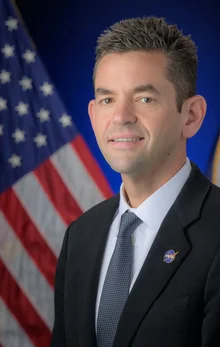
Head of NASA: Jared Isaacman

All products imported into the UK must meet food and feed safety laws to protect public health.
High-risk food and feed of non-animal origin (HRFNAO) can only enter via designated Border Control Posts (BCPs), where documentary and physical checks may be required.
Risks include contaminants like mycotoxins and aflatoxins, pesticides or harmful microorganisms such as salmonella.
Regulation (EU) 2019/1793 as amended sets controls on HRFNAO from specific countries. Compliance ensures safe imports and public health protection.
7. Third-party certifications (GFSI recognised)
Came into place in: 2015
Established by: Food and Drug Administration
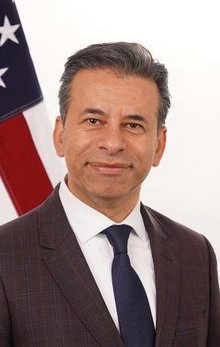
Head of the Food and Drug Administration: Dr Marty Makary
The FDA’s Accredited Third-Party Certification Program is a voluntary system where FDA recognises “accreditation bodies” to assess and monitor third-party “certification bodies” conducting food safety audits for foreign facilities.
Certifications can allow participation in the Voluntary Qualified Importer Program (VQIP) or be required to prevent unsafe imports.
Accreditation bodies evaluate, monitor and report on certification bodies, maintaining records for FDA access.
In 2018, ANSI-ASQ National Accreditation Board became the first recognised body under this programme.
6. Maximum residue limits
Came into place in: 2005
Established by: European Union
Head of European Union: Ursula von der Leyen

EU legislation on Maximum Residue Levels (MRLs) harmonises pesticide limits for food and feed across Member States.
MRLs cover 315 fresh and processed products, adjusted for dilution or concentration and about 1,100 pesticides, with a default 0.01 mg/kg for unspecified substances.
In England and Wales, The Pesticides (Maximum Residue Levels in Crops, Food and Feeding Stuffs) (England and Wales) (Amendment) Regulations 2002 enforces EU standards.
European Food Safety Authority ensures consumer safety for all groups.
5. Labelling and traceability regulations
Came into place in: 2011
Established by: European Union
Head of European Union: Ursula von der Leyen
The Regulation (EU) No 1169/2011, known as the Food Information to Consumers (FIC) Regulation, harmonises EU rules on food and nutrition labelling into a single framework.
It requires all prepacked foods to display mandatory information such as ingredients, allergens, nutrition values, net quantity and durability dates, ensuring labels are clear, accurate and not misleading.
In addition to general labelling rules, certain products are governed by specific compositional standards, including honey, fruit juices, infant formula, meat and fish products, natural mineral waters, sugars, spreadable fats and foods containing genetically modified ingredients.
4. Major national/regional regulations
Came into place in: 2011 (US FSMA), 2002 (EU General Food Law), 2022 (GACC), 2023 (EUDR) and 2010 (NOM-051)
Established by: Barack Obama (US FSMA), European Union (EU General Food Law & EUDR), National People’s Congress Standing Committee (GACC) and the Secretariat of Health, the Federal Commission for the Protection against Sanitary Risks and the Ministry of Economy (NOM-051)
The General Food Law establishes the EU’s core food safety framework, applying a farm-to-fork approach that ensures traceability, risk analysis and high consumer protection standards across all stages of production and distribution.
The Food Safety Modernisation Act (FSMA) shifts U.S. food policy toward prevention, requiring importers to verify that foreign suppliers meet American safety standards.
China’s import regime, enforced by the General Administration of Customs of China (GACC), mandates overseas manufacturer registration and strict inspection compliance.
The European Union Deforestation Regulation (EUDR) requires proof that certain commodities are deforestation-free.
Mexico’s NOM-051 mandates front-of-pack warning labels for products high in sugar, fat, sodium or calories.
3. Hazard analysis critical control point (HACCP) & ISO 22000

HACCP is a systematic approach to managing food safety hazards and forms the foundation of legally required food safety management procedures.
It requires businesses to identify what could go wrong, assess risks, determine critical control points, establish corrective actions, verify procedures are effective and maintain records.
Hazards may be microbiological (harmful bacteria), chemical (contamination) or physical (foreign objects).
HACCP systems must be appropriate to the size and nature of the business and comply with hygiene regulations.
ISO 22000 builds on HACCP principles, creating a broader Food Safety Management System that integrates quality management processes across the entire food chain.
2. WTO sanitary and phytosanitary agreement
Came into place in: 1995
Established by: World Trade Organisation (WTO)
Head of WTO: Dr Ngozi Okonjo-Iweala

The SPS Agreement, formally the Agreement on the Application of Sanitary and Phytosanitary Measures, entered into force with the creation of the World Trade Organization on 1 January 1995.
It establishes rules for food safety, animal and plant health regulations, balancing the need to protect public, animal and plant health with the goal of minimising unnecessary trade restrictions.
The agreement allows countries to set their own standards but requires them to be science-based, applied only as needed and non-discriminatory between trading partners.
Members are encouraged to follow international standards, such as those from the Codex Alimentarius Commission, but may implement higher measures if scientifically justified.
The SPS Agreement promotes transparency by requiring notification of new measures and creating enquiry points for information exchange.
It also emphasises risk assessment, equivalence of alternative measures and multilateral cooperation to prevent disguised protectionism.
By harmonising health standards while preserving national sovereignty, the SPS Agreement facilitates safe, fair and efficient international trade.
1. International standards (Codex Alimentarius)
Came into place in: 1963
Established by: Food and Agricultural Organisation (FAO) and World Health Organisation (WHO)
Head of FAO: Qu Dongyu
The Codex Alimentarius is a comprehensive collection of international food standards, guidelines and codes of practice designed to ensure the safety, quality and fairness of global food trade.
Established in 1963 by the FAO and WHO, Codex protects consumer health by setting science-based standards for veterinary drugs, pesticides, food additives and contaminants, developed through independent risk assessments and expert consultations.
While its standards are technically voluntary, they often form the basis of national legislation, promoting harmonisation and reducing trade barriers.
The WTO’s SPS Agreement references Codex standards, giving them significant influence in resolving international trade disputes.
Codex also ensures transparency and consistency in labeling, hygiene, residues, contaminants and inspection procedures.
By continuously revising standards to reflect emerging science and market practices, Codex provides consumers with safe, wholesome foods and gives importers confidence that their products meet agreed-upon specifications, supporting billions of tonnes of global food trade each year.
Company portals

Executives
Dr Marty Makary
Commissioner of Food and Drugs

Dr Ngozi Okonjo-Iweala
Director General
Dr Qu Dongyu
Food and Agriculture Organization of the United Nations (FAO)
Jared Isaacman
Administrator
Ursula von der Leyen
President