
How is Nestlé & Soil Capital Reshaping Europe’s Food Supply?
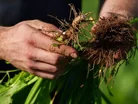
The global food and drink sector faces mounting pressure to address the environmental impact of its supply chains.
According to the World Economic Forum (WEF), "The combined effects of land degradation and drought costs the global economy US$878 bn every year, eroding food and water security, disrupting energy production and supply chains and fuelling instability, forced displacements and conflict around the world."
For food manufacturers reliant on agricultural commodities, regenerative farming practices could represent a crucial pathway toward securing long-term ingredient sourcing while meeting decarbonisation targets.
A four-year partnership between Nestlé and Soil Capital demonstrates how Europe's food industry is beginning to embed sustainability into ingredient procurement strategies.
The collaboration connects environmental performance with financial support, aiming to help farmers transition to regenerative methods while fortifying supply security for key food commodities.

Addressing degraded agricultural land
The initiative centres on providing farmers with practical support to implement regenerative practices across their operations.
According to WEF, a third of global soil is already degraded, with more than 100 million hectares lost each year, an area the size of France and Spain combined.
This soil degradation directly threatens the availability and quality of ingredients essential to food and beverage production.
Nearly 230 farmers across France, Belgium and the UK, managing more than 13,000 hectares, will gain access to agronomic guidance and digital monitoring systems that track soil health, emissions and carbon sequestration.
For food companies, these tools could offer visibility into how crops are cultivated, supporting better-informed sourcing decisions while demonstrating measurable environmental improvements across ingredient supply chains.
"We want to back farmers with the tools, science and market continuity to drive change, not by just asking them to take on risk," says Anita Wälz, Head of Sustainability at Nestlé Europe.
"We're investing in the long-term health of our supply base, strengthening resilience and focusing on soil."
The programme ties financial incentives to verified environmental outcomes.
By compensating farmers for improvements in soil function, reduced agrochemical inputs and enhanced biodiversity, the initiative aims to reduce the financial barriers often associated with adopting regenerative agriculture.
For food manufacturers sourcing wheat, corn, barley and sugar beet, this results-based model could help stabilise ingredient supply chains while advancing sustainability commitments.
Measuring environmental performance in food sourcing
A central element of the partnership is its Monitoring, Reporting and Verification (MRV) framework. Developed by Soil Capital, the system combines satellite technology with field-level data to generate verified insights into environmental performance across farming operations.
These metrics could provide food companies with the transparency required to track progress against climate targets, particularly in addressing Scope 3 emissions that account for the majority of the sector's carbon footprint.
Beyond emissions accounting, the data-driven approach strengthens sourcing transparency and risk management capabilities.
"This is what systemic change looks like, farmers being paid for outcomes society urgently needs – healthier soils, fewer emissions and more resilient ecosystems," says Chuck de Liedekerke, CEO of Soil Capital.
"It's progress you can measure, built on trust and delivered at scale."
By understanding production methods for raw materials used in food manufacturing, companies could better anticipate supply disruptions, respond to environmental pressures and develop more resilient procurement strategies.
This integration of digital monitoring into agriculture marks a shift in how the food and drink sector measures and manages sustainability across its ingredient supply base.
Expanding regenerative sourcing networks
The partnership builds on earlier pilots in France and the UK, with expansion into Belgium illustrating the growing viability of regenerative agriculture within commercial food supply chains.
What started as targeted trials has developed into a multi-country programme that balances standardised approaches with local adaptation, allowing farmers to tailor practices to regional conditions while contributing to shared environmental objectives.
As part of Nestlé's wider regenerative agriculture strategy, the collaboration reflects a long-term investment in both environmental and economic resilience across its ingredient sourcing.
"Together with Soil Capital and Nestlé's support, we are bringing more life to my soil," says Bernard Louet, a French farmer in Côte d'Or.
For the broader food and drink industry, the partnership could signal a model for integrating regenerative agriculture into mainstream sourcing strategies, connecting environmental stewardship with supply chain security in an era of increasing climate uncertainty.
Company portals

Executives

Anita Wälz
Head of Sustainability and Corporate Communications, Nestlé Europe

Chuck de Liedekerke