
Why is Soil Protection Needed for Food and Drink Stability?
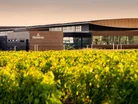
According to the Soil Association, “Soils store more carbon than the atmosphere and all of the world’s plants and forests combined, which means that soil is one of our most important weapons in the fight against climate change.”
Healthy soil can help to prevent floods, mitigate climate change effects and maximise food production.
The World Living Soils Forum (WLSF), founded by Moët Hennessy (the Wines & Spirits division of LVMH Group) and co-organised with ChangeNOW highlights the importance of healthy soil and how it can help stabilise the future.

A global soil event
The WLSF is in place to accelerate and amplify companies' governance for soil regeneration.
The Soil Association states that 95% of food production relies on soil, with healthy topsoil being essential for existence.
Despite its importance, according to the Food and Agriculture Organization, 40% of soils are facing degradation due to erosion, pollution, urbanisation and over-exploitation.
Soil is not only essential for food security, but fighting climate change and contributing to the global economy.
“Soil health and biodiversity are the foundation of all Pernod Ricard’s exceptional spirits and of our ecosystems as a whole,” writes Sandrine Ricard, Global Engagement and Sustainability Communications Director, Pernod Ricard, on LinkedIn.
“Protecting and regenerating them is absolutely essential.
“Collaboration is one of the most powerful drivers of real impact and working together is the only way to accelerate progress at scale.
“That is why we are proud to partner with the World Living Soils Forum to advance this shared ambition and help shape a more resilient future.”
Soil advisory board
For its third edition, Pernod Ricard, Nestlé & Nespresso, PwC France and Maghreb and the BPCE Group (with Natixis CIB and Mirova) are set to join the Forum’s Advisory Board, a body of fifteen experts from diverse fields.
“Regenerative agriculture is the key to build resilient food systems and is a core part of our sustainability strategy,” says Anita Wälz, Head of Sustainability and Corporate Communications Nestlé Europe.
“At the World Living Soils Forum, Nestlé and Nespresso come together to deepen dialogue with farmers, experts, policymakers and partners, turning shared insights into collective action.
“Together, we’re accelerating the transition to regenerative food systems that strengthen ecosystems, supply chains and livelihoods.”
The companies are set to share their expertise and experiences to develop actional and measurable strategies.
The aim of the WLSF is to engage with the most amount of stakeholders possible, highlighting how essential soil is, especially in the agricultural sector.
Healthy soils store, transform and recycle the nutrients that food systems depend on, providing 15 of the 18 essential nutrients plants need to grow.
According to the United Nations, when soils are nutrient-deficient, crops become less productive and less nutritious, contributing to “hidden hunger”, a chronic lack of micronutrients that already affects more than 2 billion people worldwide.
"We are joining the World Living Soils Forum and its partners because we believe soil health is central to economic stability,” says Sylvain Lambert, Partner, Sustainability Leader PwC France & Maghreb.
“Soils provide resilience, as we must manage their resources to ensure food security and drive innovation by supplying essential raw materials for future advancements in technology and energy."
Why do we need a soil mission?
The preservation of living soils is a fundamental commitment of Moët Hennessy’s sustainability approach, reflecting its responsibility to nurture this vital heritage while maintaining a balance between business activities and the needs of nature and communities.
Soils are a complex ecosystem and one of the earth’s most precious natural resources; regenerating them is essential for mitigating and adapting to climate change, combating biodiversity loss and ensuring long-term sustainability and resilience for the entire wine and spirits industry.
“Our cooperative model roots us in local territories and the people who shape them,” says Adèle Almohalla-Baux, Head of ESG Policy & Advocacy, Groupe BPCE.
“By joining the World Living Soils Forum’s Consultative Council, BPCE Groupe, with Natixis CIB and Mirova, stands alongside soil regeneration leaders to develop practical, on-the-ground solutions that meet real needs.”
Today, numerous solutions and innovations across viticulture and agriculture enable more sustainable management of terroirs and accelerating this transition requires the sharing of best practices and knowledge.
In this context, the World Living Soils Forum was created as an international platform organised by a private actor to connect individuals committed to soil regeneration, promote concrete actions for sustainable and regenerative viticulture and agriculture, strengthen the link between science, innovation and field realities and gather science-based KPIs and methodologies that support soil health.
"We are proud to join this alliance and thus contribute to accelerating a transition in which we are already fully committed,” says Noémie Bauer, Global Chief Sustainability Officer at Pernod Ricard.
“Since 2019, we have been deploying regenerative agriculture programs with our partners in our vineyards and beyond, in Pernod Ricard's priority terroirs.
“True to our spirit of conviviality and sharing, we are convinced that it is by joining our forces that we will be able to achieve a decisive upscaling for the resilience of our terroirs."
The forum brought together researchers, experts, public institutions, journalists, trade associations and companies from the food and beverage industry for two days of conferences, round tables, masterclasses and workshops.
Company portals





Executives
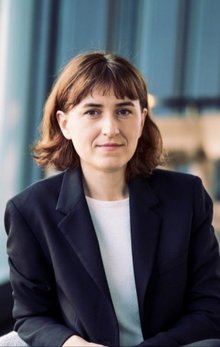
Adèle Almohalla-Baux
Head of ESG Policy & Advocacy

Anita Wälz
Head of Sustainability and Corporate Communications, Nestlé Europe
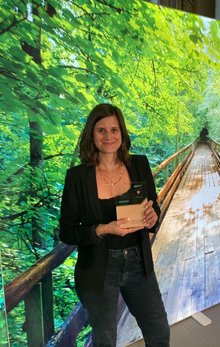
Noémie Bauer
Global Chief Sustainability Officer

Sandrine Ricard
Global Engagement and Sustainability Communications Director
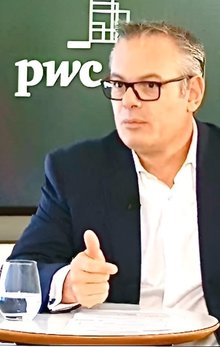
Sylvain Lambert
Partner and Sustainability Leader PwC France & Maghreb