
Talus & PepsiCo: Green Fertiliser for Farming & Food Systems
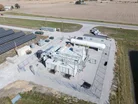
A beverage manufacturer and an ammonia producer have established a partnership that could reshape how food companies address emissions from agricultural inputs.
PepsiCo and Talus announced a collaboration agreement focused on reducing carbon intensity in fertiliser production across the global food supply chain.
The arrangement will initially cover PepsiCo's operations in Europe, Sub-Saharan Africa, Asia-Pacific and its global teams.
According to the companies, the collaboration will extend to US operations and connect to the proposed Blue Earth project in Minnesota.

Fertiliser's role in food emissions
Fertiliser production represents one of the most emissions-intensive elements within food and beverage supply chains.
For companies that source agricultural commodities, the carbon footprint extends beyond direct supplier relationships into the upstream production of farming inputs.
"Decarbonising fertiliser is important to advancing climate progress at scale, but it should be done in a way that works for farmers," says Margaret Henry, Vice President of Sustainable and Regenerative Agriculture at PepsiCo.
According to the University of Cambridge, fertiliser production and application accounts for 2.6 gigatonnes of CO₂e annually.
This exceeds the combined emissions from aviation and shipping.
For agricultural supply chains, this could represent a substantial source of Scope 3 emissions that often goes unaddressed.
The Haber-Bosch process underpins nearly all synthetic fertiliser manufacturing and relies on natural gas as both energy source and feedstock.
Steam methane reforming in this process releases substantial CO₂.
According to Nature's scientific reports, production alone accounts for 38.8% of total synthetic nitrogen fertiliser emissions across the supply chain.
This could mean food companies need to engage with fertiliser suppliers to address agricultural emissions.
The introduction of the EU's Carbon Border Adjustment Mechanism will require importers to account for emissions embedded in fertilisers when it takes full effect later in 2026.
This regulatory development could signal that supply chain emissions transparency will become mandatory for food manufacturers sourcing ingredients from Europe.
Physical pilots and market mechanisms
PepsiCo will combine physical low-carbon fertiliser pilots with market-based mechanisms through this collaboration.
According to the company, this approach could deliver auditable emissions reductions while maintaining cost accessibility for farmers who supply crops to food manufacturers.
"This agreement helps create a strong demand signal for low-emissions ammonia while supporting both more stable input economics for growers and the long-term transition of the fertiliser market," adds Margaret.
The beverage company will secure verified low-emissions ammonia environmental attributes through Talus' book-and-claim model.
This system tracks environmental attributes separately from physical fertiliser flows, allowing food companies to account for lower-carbon inputs without requiring immediate changes to physical supply routes.
"This global collaboration is a prime example of how credible market-based mechanisms can help build supply chain reliability, lower fertiliser costs for local farmers and accelerate investment in low emissions fertiliser production," says Hiro Iwanaga, CEO at Talus.
"With PepsiCo's leadership, we will work together to help derisk new capacity while supporting more resilient and sustainable food systems."
S3 Markets will provide Environmental Attribute Certificates lifecycle management infrastructure for the partnership.
The system will handle issuance, tracking and retirement of what the parties describe as the world's first tokenised ammonia fertiliser EACs from Talus' Boone facility in Iowa.
Infrastructure for tracking carbon claims
The infrastructure component could matter to food companies making carbon-reduction claims.
According to S3 Markets, the system provides auditable records that food and beverage brands may need for regulatory compliance and consumer communication.
"This collaboration helps demonstrate how trusted market infrastructure can support credible book-and-claim systems for low-carbon commodities," says Saman Baghestani, CEO of S3 Markets.
"By enabling secure and auditable EAC lifecycle management, we can help innovative producers like Talus and forward-looking buyers like PepsiCo to participate with confidence as these markets develop."
The book-and-claim model could allow food manufacturers to start reducing reported agricultural emissions without waiting for the complete transformation of physical supply chains.
This could provide a transition pathway for companies facing pressure to reduce Scope 3 emissions.
Supply chain resilience for ingredients
Talus' production model focuses on distributed generation of ammonia closer to where farmers use it.
This approach could reduce food companies' exposure to supply chain disruptions that affect ingredient availability.
Centralised global fertiliser supply chains face exposure to geopolitical tensions, logistics bottlenecks and price volatility.
These disruptions can affect crop production and ultimately impact food manufacturers' ability to source ingredients at stable prices.
Localised fertiliser production could help mitigate these risks for food companies that depend on a consistent agricultural supply.
According to the companies, distributed production lowers transportation emissions and costs while improving access to a reliable fertiliser supply in both developed and emerging markets.
"By supporting initiatives like Talus, PepsiCo aims to advance lower-carbon, locally produced fertiliser solutions that can help strengthen supply chain resilience and deliver climate benefits for agriculture," says Margaret.
For food and beverage companies, fertiliser availability affects ingredient costs and supply security.
A more distributed production network could mean fewer supply shocks from geopolitical events or infrastructure failures that disrupt centralised fertiliser trade routes.
Company portals



Executives
Margaret Henry
Vice President, Sustainable & Regenerative Agriculture