
Middle East Crisis Threatens Global Food & Drink Supplies
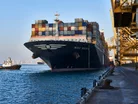
The escalation of military conflict between the US, Israel and Iran has triggered an immediate crisis across global food and drink supply chains, with the effective closure of the Strait of Hormuz creating unprecedented disruptions to the movement of agricultural commodities, perishable goods and essential food imports worldwide.
The Islamic Revolutionary Guard Corps has issued radio warnings prohibiting vessel passage through the strait, reportedly trapping nearly 170 container ships and halting movement of critical food supplies that feed millions across the Middle East and beyond.
The region, which imports 85% of its food, now faces mounting security concerns as transportation networks prioritise military and medical cargo over perishables.

Shipping lines respond to crisis
Major shipping lines have responded swiftly to the crisis.
Maersk announced suspension of all vessel crossings through the Strait of Hormuz, with services calling ports in the Arabian Gulf experiencing delays, rerouting or schedule adjustments.
Hapag-Lloyd cited the official closure of the Strait by relevant authorities in suspending all transits.
Mediterranean Shipping Company (MSC) has instructed all vessels currently operating in the Gulf region to proceed to designated safe shelter areas.
The diversions around the Cape of Good Hope add approximately 3,500 nautical miles and roughly US$1m in fuel costs per voyage, expenses expected to be passed to food importers and ultimately consumers.
Operations at Jebel Ali Port, the Middle East's largest container hub and a critical gateway for food imports, were temporarily suspended after debris from an aerial interception caused a fire within the port area.
"The speed and scope of escalation in the Middle East will have taken many businesses by surprise and has highlighted just how unstable the region can become in as little as 48 hours," said Simon Geale, EVP at Proxima.
"What will concern companies is that we may just be at the start of a prolonged conflict and there may be much more to come in terms of the impact on global supply chains."
Linerlytica estimates approximately 450,000 Twenty-foot Equivalent Units (TEU) of containers remain stuck inside the Gulf, with a significant portion containing temperature-sensitive food products.
Air freight capacity severely impacted
The conflict has severely impacted air freight capacity for perishable goods, with data from Netherlands-based consultancy Rotate showing global air cargo capacity down 18% from the previous week.
Emirates SkyCargo, the fourth-largest cargo airline by traffic, suspended flights until 15:00 United Arab Emirates (UAE) time on 2 March 2025, while also placing temporary restrictions on booking and acceptance of all new shipments for 24 hours.
FedEx has suspended flights to and from Bahrain, Iran, Iraq, Israel, Jordan, Kuwait, Lebanon, Oman, Qatar, UAE and Saudi Arabia, with pickup and delivery services in several of these markets temporarily halted.
The International Maritime Organization's Secretary-General, Arsenio Dominguez, issued a statement on the situation: "No attack on innocent seafarers or civilian shipping is ever justified. These crews are simply doing their jobs and must be protected from the effects of wider geopolitical tensions."
Qatar Airways, which operates 29 Boeing 777 freighter aircraft offering more than 3,000 tonnes of capacity per day, has temporarily halted flights due to Qatar's airspace closure.
The suspension of perishable cargo services could prove particularly damaging for food and beverage companies relying on air freight to transport high-value products such as seafood, fresh produce and specialty ingredients to global markets.
Long-term supply chain implications
The Strait of Hormuz blockage threatens nitrogen fertiliser exports ahead of Northern Hemisphere spring planting.
Prolonged disruption could trigger shortages in South Asia and Latin America, causing crop yield drops for late 2026 and food price spikes.
Rafael Grossi, Director General of the IAEA, warned at the opening of the quarterly board meeting on March 2 that mass evacuation of cities across the Middle East may become necessary if civil nuclear power stations are attacked.
"We cannot rule out a possible radiological release with serious consequences, including the necessity to evacuate areas as large or larger than major cities," he said.
"We therefore urge utmost restraint in all military operations."
Rising costs of transport, energy and raw materials could mean consumer goods prices soar during 2026.
Recent research from the Chartered Institute of Procurement and Supply warned of such increases even before the current crisis.
The Middle East's dependence on food imports makes the region particularly vulnerable to supply chain disruptions.
Temperature-controlled shipping routes that normally carry dairy products, frozen goods, meat and fresh produce are now subject to extensive delays or complete rerouting.
Recent briefings delivered by DP World COO, Tiemen Meester, emphasised: "The Middle East is a vital trade route... our focus is on providing superior infrastructure and security to ensure the global supply chain can thrive even in a volatile environment."
Food manufacturers relying on just-in-time delivery face severe operational challenges.
Ingredients sourced from the Gulf region or transiting through affected waters now face uncertain delivery schedules, forcing companies to seek alternative suppliers or absorb higher costs for emergency air freight where capacity exists.
As food and beverage companies worldwide assess the implications of sustained conflict, the immediate priority remains implementing contingency plans and preparing for potential weeks or months of disruption to global trade routes that serve as arteries for international food security.





Executives
Arsenio Dominguez
Secretary General

Rafael Grossi
Director General
Simon Geale
Tiemen Meester
Group COO Ports & Terminals