
How Maersk and Coca-Cola Harness AI in the Supply Chain
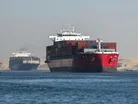
Global trade faces increasing pressure from climate events, cyberattacks and geopolitical instability.
With trade routes constantly shifting and disruptions growing more frequent, businesses are urged to lead the adoption of AI across key industries.
The World Economic Forum’s Chief Economist Outlook confirms this shift, revealing that 86% of economists believe companies must take charge in integrating AI infrastructure to help stabilise and future-proof supply chains.
Business leaders face the task of adapting to a fragmented global trade environment.
As trade routes evolve due to new tariffs and retaliatory measures, triggered, for example, by US-imposed restrictions under President Donald Trump, firms must act quickly to manage logistics and regulatory complexities.
AI offers tools that can predict, monitor and respond to these shifting trade landscapes in real time.

AI tackles disruption and complexity across trade routes
Intelligent systems such as agentic AI can autonomously manage core parts of the supply chain.
Agentic AI refers to AI capable of operating independently within set tasks. In the context of trade, it can track global developments like weather, sanctions and cyber threats as they unfold, updating documentation automatically and rerouting shipments as needed.
These systems also handle compliance checks, helping businesses avoid costly delays and penalties.
More than just reactive, AI systems apply predictive modelling to simulate different supply chain scenarios.
These simulations allow decision-makers to test strategies, align with operational goals and respond faster to change.
This capability becomes essential as international trade experiences not just isolated disruption but systemic volatility.
Maersk creates a digital twin to model its terminals
Maersk demonstrates what AI can achieve when fully embedded into logistics.
The shipping and logistics company integrates AI through digital twin technology.
A digital twin is a virtual model that mirrors a physical system, in this case, Maersk's terminal operations.
It draws on input from terminal sensors and datasets to simulate real-time environments.
Krishnan Srinivasan, Chief Data Officer at Maersk, says: “We have all these inputs from our terminals, from different sensors and data. And we have actually created a complete digital twin of the whole terminal.
“This provides us with the capability to do ‘what if’ scenarios - much ahead of time,” he says. “What used to take days takes hours.”
With this virtual model, Maersk can test multiple scenarios without interrupting its operations.
The digital twin helps the company optimise supply chains by analysing customer behaviour and historical sales data to anticipate demand.
This predictive approach strengthens operational efficiency and allows Maersk to act faster and with more precision.
Coca-Cola blends machine learning with planning
Coca-Cola adopts a different approach but shares the same objective.
The company uses a Customer Demand & Supply Planning system that includes machine learning capabilities.
This system forecasts sales demand, guiding distribution decisions across its supply chain.
These forecasts enable Coca-Cola to meet customer expectations consistently while managing resources more effectively.
José Antonio Echeverría, Chief Customer Service & Supply Chain Officer for Coca-Cola Europacific Partners, says: “This will help us to deliver better service for our customers and move forward on our journey to realise what the factory of the future looks like.
“We are adopting and continually exploring new technology to improve and enhance how we work - creating an efficient, safe and sustainable supply chain.”
By building forecasting into its operations, Coca-Cola creates flexibility in how it responds to fluctuating market demand.
The machine learning models learn over time, making predictions more accurate and the planning process more dynamic.
Delays in AI adoption could amplify supply risks
Despite the clear potential of these systems, AI adoption across global trade remains limited.
Many businesses have yet to invest in intelligent infrastructure.
For companies slow to integrate AI, this delay may expose them to future disruptions with fewer tools to mitigate the impact.
As digital infrastructure becomes more central to trade operations, decision-makers are encouraged to act early.
Building AI into the supply chain equips businesses to handle uncertainty and remain resilient as trade becomes more complex.
Both Maersk and Coca-Cola show that AI is not just a technical upgrade, it is a core strategy for survival and growth in today's global economy.
Through digital modelling, predictive systems and machine learning, these companies streamline their operations and maintain continuity even in volatile conditions.
Their investment in intelligent systems positions them to meet the demands of modern trade and navigate an uncertain future.