Steve Cahillane to Lead Kraft Heinz Through Company Split
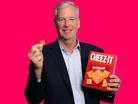
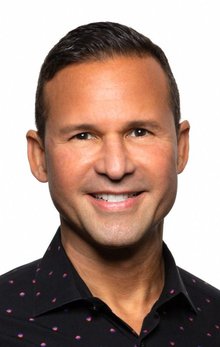
The Kraft Heinz Company has appointed experienced consumer goods executive Steve Cahillane as its next chief executive, marking a significant moment for the packaged food manufacturer as it prepares to divide into two independent public companies.
The leadership change comes as the company seeks to address years of sluggish performance in an increasingly challenging food and beverage market.
Steve will take up the chief executive position on 1 January 2026, replacing Carlos Abrams-Rivera, who will step down but remain as an adviser through 6 March to facilitate the leadership transition.
Strategic split reshapes food portfolio
The incoming CEO will also join the Kraft Heinz board and is expected to lead Global Taste Elevation Co., the sauces and condiments-focused entity that will be created following the company's planned separation.
"I am honoured to be joining Kraft Heinz as CEO at such a pivotal and exciting time," says Steve.
"Like millions of people around the world, I have a deeply personal connection to the Kraft Heinz brands, dating back to my childhood."
The appointment represents a strategic move by the company to bring in leadership with proven experience in navigating major corporate transformations and brand portfolio management.
Kraft Heinz announced in September that it would separate its operations into two standalone entities: one centred on condiments and sauces such as Heinz ketchup and another focused on North American grocery brands including Oscar Mayer and other processed food staples.
The transaction, anticipated to close in the second half of 2026, is intended to sharpen strategic focus and streamline operations.
The division could represent a watershed moment for the packaged food industry, as consumer preferences continue to shift towards fresher, less processed options.
By separating its businesses, Kraft Heinz is attempting to create two more agile companies capable of responding to evolving food trends and market demands.
Each entity will have the flexibility to pursue distinct strategies tailored to their specific market segments and consumer bases.
The condiments-focused company will be able to capitalise on the global appeal of iconic brands like Heinz ketchup and HP Sauce.
Meanwhile, the North American grocery business can concentrate on revitalising heritage brands and adapting to regional market dynamics without the constraints of managing a diverse global portfolio.

Steve's experience
Steve brings considerable experience navigating corporate transformations within the food and beverage sector.
Most recently, he served as chairman, president and chief executive of Kellanova, the global snacking company.
Under his leadership, Kellanova expanded its portfolio of global brands including Pringles, Cheez-It and Pop-Tarts, before being acquired by Mars for roughly US$36bn in December 2025.
Earlier in his career, Steve held senior leadership positions at The Nature's Bounty Co., The Coca-Cola Company and AB InBev, establishing himself as a brand-focused executive with substantial operational experience across global consumer markets.
His track record demonstrates an ability to drive growth through brand innovation and strategic portfolio management.
At Kellanova, he successfully navigated the company through its separation from Kellogg Company, experience that will prove valuable as Kraft Heinz undergoes its own split.
Steve's background in both beverages and packaged foods gives him unique insight into the challenges facing traditional food manufacturers in today's rapidly evolving marketplace.
The future of the company
Miguel Patricio, Kraft Heinz's outgoing board chair, says Steve's background made him well-suited for the role.
He says: "Steve is uniquely qualified to lead this organisation into the future," adding that Carlos has helped make the company "more agile and innovative" and laid the groundwork for the upcoming separation.
As part of the leadership changes, John T. Cahill, vice chair of the board and former Kraft chief executive, will succeed Patricio as board chair.
Kraft Heinz also said it will begin a global search for a chief executive to lead North American Grocery Co., after Carlos was initially expected to run that business following the split.
The board's decision to conduct a separate search for the North American Grocery Co. chief executive suggests the company recognises the distinct challenges facing each business.
This approach allows Kraft Heinz to identify leadership specifically suited to the unique demands of the North American market.
The transition timeline has been carefully structured to ensure continuity, with Carlos remaining available as an adviser during the critical early weeks of Steve's tenure.
Mounting challenges in food sector
The leadership change arrives amid mounting pressure on Kraft Heinz to reverse years of declining shareholder value.
The company's shares have fallen roughly 75% from their 2017 peak and its valuation trails peers such as PepsiCo, Coca-Cola and Mondelez.
Steve has acknowledged the obstacles ahead, including slow organic growth, shifting consumer preferences towards fresher foods and competition from private-label brands.
With inflation, economic uncertainty and changing eating habits reshaping the packaged food landscape, Kraft Heinz is betting that experienced leadership and a more focused structure can help restore momentum.
The company's ability to adapt its food portfolio to changing consumer tastes could prove critical to its future success in an evolving market.
Younger consumers in particular are gravitating towards brands perceived as healthier, more sustainable and less processed.
Kraft Heinz must balance the heritage and recognition of its established brands with the need to innovate and respond to these shifting preferences if it hopes to regain investor confidence and market share.