
Mars & Ofi: Partnering for Net Zero Cocoa Farming in Ecuador
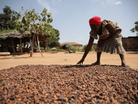
Mars, Incorporated and Olam Food Ingredients (Ofi) have announced a five-year strategic collaboration aimed at accelerating net zero cocoa production in Ecuador.
Building on more than a decade of joint work in the region and more than 15 years of global collaboration, the initiative focuses on transforming cocoa farming through climate-smart and regenerative practices.
The programme is designed to reduce GHG emissions while improving soil health, productivity and farmer resilience.
Scaling regenerative cocoa farming
The collaboration will aim to support more than 960 farmers across key cocoa-growing regions in Ecuador, including El Oro, Esmeraldas, Guayas, Los Ríos, Manabí and Santo Domingo
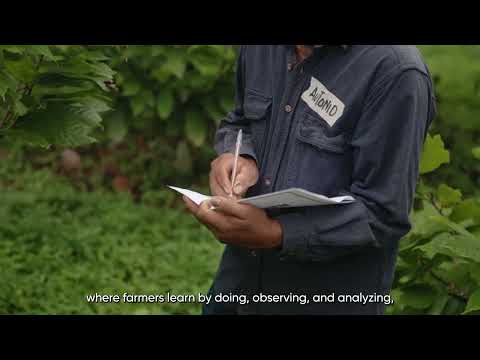
These farmers can implement regenerative agriculture techniques such as agroforestry, transitioning away from monoculture systems toward more diverse, forest-like farming structures.
The approach is expected to cover more than 9,000 hectares of farmland, helping restore ecological balance while improving long-term cocoa productivity.
This scale of land is roughly equivalent to the size of the Greek island of Santorini.
The program also builds on a decade of joint activity in Ecuador, strengthening long-term impact in cocoa sourcing communities.
“Building on our long-standing collaboration in cocoa sourcing, this effort demonstrates our belief that when companies share common goals, they can deepen cooperation and drive more meaningful impact at scale,” says Benjamin Guilbert, Global Vice President, Cocoa at Mars.
“We value Ofi’s ongoing commitment to helping Mars realise our vision of a more modern, inclusive and sustainable cocoa ecosystem that can support farmers and the environment.”
Reducing emissions and improving soil health
A key focus of the initiative is reducing the carbon footprint of cocoa production while increasing farm-level efficiency.
Farmers will aim to adopt low-carbon fertilizers, improved crop residue management and biochar applications to enhance soil fertility.
These methods are designed to reduce GHG emissions, increase carbon dioxide removals and improve overall crop yields.
Together, these interventions aim to make cocoa farming more resilient while directly supporting climate mitigation outcomes across participating farms.
“Together with Mars, we’re scaling up regenerative practices like agroforestry and biochar in Ecuador aimed at cutting greenhouse‑gas emissions and helping to secure the future supply of cocoa,” says Andrew Brooks, Head of Cocoa Sustainability at Ofi.
“By making these practices more accessible to farmers, we hope to reduce barriers for implementation and costly inputs, while opening new income opportunities that can make a real difference to building more resilient livelihoods.
“Our latest climate action collaboration with Mars is sparked by our shared, science‑based net zero ambitions to create change for a stronger food system so we can continue to enjoy the chocolate products we all love.
“Working jointly in Ecuador for 10 years, we’re developing local insights to help accelerate positive impact for the people and landscapes vital for cocoa.”
Building sustainable cocoa supply chains
Beyond environmental outcomes, the collaboration aims to strengthen the livelihoods of farming communities, with an estimated 4,800 people expected to benefit indirectly.
By improving productivity and reducing input costs, the initiative supports more stable and resilient income opportunities for cocoa farmers.
The program is driven by Mars and Ofi’s shared net zero by 2050 ambitions and their commitments validated by the Science Based Targets initiative (SBTI).
“True progress on climate requires shared ambition and mutually beneficial value,” says Pedro Amaral, Associate Director, Head of Cocoa Climate Sustainability, Mars.
“Having net zero targets validated by SBTi enables a bold framework for Mars and Ofi to invest together in the long term in solutions that are good for cocoa farmers, good for the environment and good for the future of our supply chain.”
Together, the companies aim to co-invest in farmer-centred solutions that improve resilience, support sustainable supply chains and contribute to long-term change across the cocoa sector.