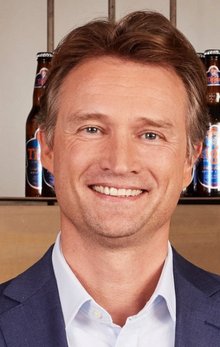
CEO Resignation Highlights Industry Pressure
The brewing industry faces a watershed moment as one of its most prominent leaders steps back from the frontline. On 12 January 2025, Heineken announced that Dolf van den Brink had informed the board of his decision to step down as CEO on 31 May 2026, bringing an end to a six-year tenure marked by significant transformation and mounting market challenges.
Van den Brink, who spent more than 28 years with the company, will remain in an advisory role for eight months to support the leadership transition. His departure coincides with Heineken's unveiling of EverGreen 2030, a comprehensive five-year growth strategy designed to strengthen the company's position in emerging markets, enhance digital capabilities and drive productivity improvements.
"After six years as CEO and more than 28 years at Heineken, I believe this is the right moment to transition leadership as the company prepares for the next phase of the EverGreen strategy," Dolf says. "The past years have been marked by significant change as Heineken progressed through its transformation and has now reached a stage where a transition in leadership will best serve the company in further executing its long-term ambitions. Over the coming months, I remain fully focused on disciplined execution of our strategy and to ensure a smooth transition."

Shifting consumer preferences reshape the beer market
The timing of the resignation of Dolf van den Brink reflects broader challenges confronting the global brewing sector. Heineken reported that sales volumes were likely to decline in 2025, with the company experiencing a 4% revenue decrease in its third quarter last year.
These figures could signal a fundamental shift in drinking patterns across key markets. According to Drinkaware, 49% of adults in the UK are now choosing no or low alcohol options to moderate their drinking, with the no and low alcohol market experiencing significant year-on-year growth.
The trend towards moderation extends beyond product choice, with consumption levels declining across demographic groups. Data from Gallup shows the number of adults who drink dropped from 72% in 2001-2003 to 62% in 2021-2023.
According to the BMJ, younger generations are prioritising health, reducing expenditure due to cost-of-living pressures and increasingly socialising in online spaces rather than traditional venues where alcohol consumption typically occurs.
Retailer tensions and inflationary pressures
The brewing industry's challenges extend beyond changing consumer preferences to include strained relationships with key retail partners. In 2025, several European retailers delisted Heineken products following proposed price increases from the company.
Major retailers in France, the Netherlands, Germany and Spain removed some or all Heineken brands from their shelves. UK supermarkets also delisted certain products, citing poor sales performance.
Rising costs have created pressure throughout the beverage supply chain, with manufacturers seeking to pass increases onto retailers and consumers. Heineken has also faced headwinds in the US market, particularly following new tariff implementations.
The company's EverGreen 2025 plan identified emerging markets such as Vietnam and Nigeria as growth opportunities, but both markets have presented unexpected obstacles. A proposed 90% alcohol tax in Vietnam and inflation pressures led to the company suspending its brewery operations there in 2024 and readjusting its Nigerian strategy.
Succession planning for strategic execution
Heineken's supervisory board has initiated a search process to identify the successor of Dolf van den Brink, though no potential candidates have been named. Dolf will remain available in an advisory capacity from 1 June 2026 to assist the incoming CEO and provide industry insight.
The transition comes at a critical juncture for the company as it seeks to implement its new strategic vision. The EverGreen 2030 strategy represents a comprehensive roadmap for navigating the evolving beverage landscape.
Strong leadership will be essential as Heineken addresses market headwinds and capitalises on emerging opportunities. The supervisory board has emphasised the importance of disciplined execution in the next phase of growth.
Peter Wennink, Chairman of the Supervisory Board of Heineken, says: "The Supervisory Board is grateful to Dolf for his leadership and long-standing commitment to Heineken, including guiding the company through a demanding period of transformation, delivering on EverGreen 2025 while navigating a challenging external environment.
"With the launch of EverGreen 2030, Dolf has set out a compelling strategy for the future of Heineken, and the Supervisory Board greatly values his contribution. The next phase will focus on bringing this strategy to life through disciplined execution of our strategic growth ambitions. With this in mind, the Supervisory Board agrees this is the right moment to start the succession process to secure strong leadership for the future."
Company portals
Executives
Dolf van den Brink
Chairman of the Executive Board/ CEO