AEG Europe: Can Festivals Really Be Fully Sustainable?
For many, music festivals mean camping, live acts and time with friends, but behind the scenes, they create dense pockets of environmental strain.
With thousands gathering for days at a time, festivals consume energy, create waste and encourage car travel, making them complex operations to decarbonise.
AEG Europe – the events business behind venues and shows across the continent – is now using its new LIDO Festival in East London as a live experiment in sustainability.
"We’re tasked with building a small town in a park in summer with festivals," says Sam Booth, Director of Sustainability at AEG Europe.
"Sustainability means rethinking everything – from how we power stages to what food we serve and how our fans arrive."
Clean power and energy storage replace diesel
Powering a festival site means more than just lights and sound systems. Stages need strong energy loads, often supplied by diesel generators, which emit CO2 and other pollutants. At LIDO, AEG Europe partners with Ecotricity X Grid Faeries to supply 100% renewable electricity.
Battery storage sits at the core of this plan. The main stage at LIDO runs on battery units charged from wind energy.
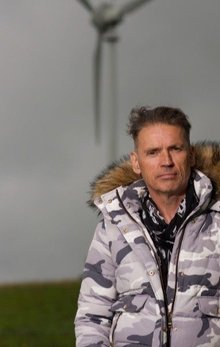
Dale Vince, Founder of Ecotricity and Co-Founder of Grid Faeries, says: "What we're really here to do is to take the diesel out of festivals, gigs and live sporting events. Anything that's in the live sector is probably running on diesel – we are here to change that."
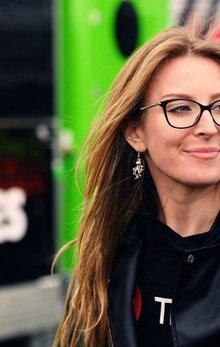
Claire O’Neill, CEO and Co-Founder of A Greener Future and Co-Founder of Grid Faeries, adds: "We're providing this battery for the main stage connected to the grid. It's a three megawatt-hour battery, which in event world terms is the equivalent of two 500 KVA generators. So it covers what the main stage would generally need, and then with the connection of the grid, we can keep it charged over the whole five events."
Elsewhere on site, LIDO trials hydrogen generators using green hydrogen – created using renewable electricity and emitting only water vapour when burned.
Diesel use is now limited to hydrogenated vegetable oil in isolated operations.
“But our focus is on moving to batteries and hydrogen wherever possible,” Sam says.
The benefits go beyond cutting emissions. “There’s a big shift once people realise the sound quality is better and the air is cleaner,” Sam adds.
Food, waste and travel: reducing impact at every touchpoint
Waste is another persistent issue at festivals, where tents, plastics and packaging often end up in landfill.
LIDO has cut its waste streams down to two: compostables and aluminium cans. All food and drink sold on site uses compostable trays, cutlery and napkins.
“All food waste and packaging go into one bin and are sent to commercial composters. Cans, meanwhile, can be infinitely recycled,” Sam says.
LIDO works with Every Can Counts – a recycling initiative – to help keep bins sorted and clean.
“We even have people hand-sorting bins to keep contamination low and recycling rates high,” Sam adds.
To further reduce transport impact, LIDO installs a baler – a machine that compresses aluminium into dense blocks.
“If we can send pure blocks of aluminium offsite, we can actually earn money back on our recycling,” says Sam. “Recycling is my favourite thing!”
Food has a large carbon footprint, and AEG Europe aims to address this by mapping emissions across menus.
“Every pint, every burger carries its own carbon tag,” Sam says.
Traders are selected for local sourcing and low transport mileage. On day one, with Massive Attack headlining, the entire menu is plant-based.
“We’re not saying meat eating is bad, but it has a huge carbon footprint,” Sam explains.
On other days, 20% of food options are vegetarian or vegan. Items are labelled A to E, rating their carbon impact.
He adds: “We want people to be informed, so they know choosing steak over vegetables makes a difference.”
Transport is the final challenge.
“Fan travel is the biggest issue – around 80% of our carbon footprint,” Sam estimates.
LIDO’s location in Victoria Park makes public transport, walking and cycling viable for most attendees. Visible infrastructure, such as bike parks and walking routes, reinforces these choices.
Arrival data from fans is collected post-event to shape future plans.
“Our plan is to use that data in future years to start trying to influence how people get to us and hopefully start addressing it through things like carbon removals,” Sam says.
Artists, fans and suppliers join the sustainability effort
For LIDO to succeed as a model, support from artists, fans, and suppliers is essential.
Hunny, the performer who opened the main stage, says: "As artists, we want to be doing this forever. And as customers at the festival, we want to be able to go to festivals forever. So we need to make it sustainable and be resourceful."
Sam confirms growing interest from performers in the festival’s approach.
“There’s more interest from artists now about our carbon footprint and environmental initiatives. We want to be able to go to them with ready-made solutions.”
Changing behaviours takes time, especially in production and supply chains. “Doing new things can be tricky, especially in an industry where things have always been done a certain way,” Sam says. “But sustainability can actually improve the fan experience.”

Clean air, less noise and clear signage all contribute to that improved experience. “Our aim is to heighten the experience and operate quietly in the background so that the festival feels the same – just better,” he adds.
For Claire, the influence of LIDO reaches beyond the event itself.
“Not only can festivals be sustainable in themselves, but they can help towns and all of life beyond the festival change," she says.
Sam sdds: “I’ve had conversations with counterparts from other companies who want to know how we do it. Sustainability is not a competition; it’s meant to be a collaboration.”
Dale agrees: “Festivals change people's perception of life and of what's possible. When people come to LIDO and see batteries, plant-based food and electric buses, they see a different picture of the future – they see the alternative.”
Company portals

Executives
Claire O'Neill
Co-Founder
Dale Vince
Chairman
Sam Booth
Director of Sustainability