
Amazon: Is Checkout-Free Shopping What Shoppers Want?
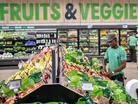
Amazon brings its UK checkout-free retail experiment to a halt, confirming that all 19 of its Amazon Fresh stores across the country are closing.
Launched in 2021, these outlets promised to redefine grocery shopping with "Just Walk Out" technology.
But faced with high operating costs and strong competition from British supermarket giants, the format failed to take hold.
The decision marks the end of a bold concept that allows customers to skip the tills entirely.
Instead of scanning groceries, shoppers enter using a mobile app and walk out with items automatically billed to their accounts.
Cameras and sensors track every movement and product picked up in-store.
While it stands out in terms of innovation, the technology struggles to match the pace of traditional supermarket models in the UK.
Amazon confirms it will convert five of the closing locations into Whole Foods Market branches. It acquired the organic grocery chain in 2017 for US$13.7bn and has since begun aligning its operations more closely with the wider Amazon ecosystem.
A bold concept meets a cautious market
Amazon Fresh debuted in March 2021 with a store in Ealing, London.
The launch brought British consumers their first taste of a checkout-free shopping model, based entirely on automation and app-based entry.
It is a contrast to the approach taken by long-standing players like Tesco, Sainsbury’s and Waitrose, where customer loyalty, broad store networks and consistent pricing have long been key to market share.
Although Fresh arrived during the height of the COVID-19 pandemic, when contactless experiences were in demand, the easing of restrictions saw many customers returning to more familiar shopping behaviours.
Amazon’s heavy investment in in-store tech, while advanced, resulted in greater operating costs than traditional formats.
The result is a model that fails to deliver on cost or convenience for the everyday shopper.
"As someone with a keen interest in innovation in the retail industry, it was revolutionary for Amazon to introduce contactless shopping," says Tom Smith, an Associate at Emery Planning Partnership.
"I'm sure other retailers will make use of this technology in the future. Anything is better than self-checkouts."
Despite the initial excitement, Fresh never managed to capture the UK grocery buyer in large numbers.

A strategic shift towards Whole Foods
Amazon's exit from Fresh stores aligns with broader changes in its grocery strategy.
The company now places greater focus on its Whole Foods Market brand.
Though the organic grocer has operated independently since Amazon’s US$13.7bn acquisition, this is shifting.
Amazon extends corporate policies, including pay and benefits, to US-based Whole Foods staff over the summer.
This signals a move to integrate the business more tightly into its core retail operations.
The five Fresh locations that remain will be converted into Whole Foods stores.
Whole Foods already runs several UK branches, making it easier to repurpose these locations without major logistical overhauls.
With a clearer identity and an established brand known for premium organic products, Whole Foods offers Amazon a way to retain physical grocery presence without continuing the Fresh model.
At the same time, the company uses its digital strength to reposition itself in UK grocery.
Amazon aims to double its Prime subscriber base and promises access to a mix of options through partnerships with Morrisons, Iceland, Co-op and Gopuff.
From next year, customers will also be able to buy fresh produce such as meat, dairy and seafood directly from Amazon’s website.
"Since 2008, we've worked hard to innovate to help our customers save time and money when shopping for groceries and household essentials," says John Boumphrey, Country Manager for Amazon UK.
"We continue to invent and invest to bring more choice and convenience to UK customers, enabling them to shop for a wide range of everyday essentials and groceries with low prices and fast delivery through Amazon.co.uk, Amazon Fresh and Whole Foods Market stores, alongside our third-party grocery partners, including Morrisons, Co-op, Iceland and Gopuff."
The quote highlights a shift from physical retail experimentation to a broader multi-channel approach rooted in logistics, delivery and partnerships.
Regulatory pressure and staff impact
Amazon’s grocery ambitions in the UK face external scrutiny too.
In June, the Groceries Code Adjudicator opens an investigation into the company following claims of delayed payments to suppliers.
Amazon is also under pressure to comply with the Groceries Supply Code of Practice, a set of rules meant to protect suppliers from unfair trading practices by large retailers.
As part of the Fresh closure, Amazon says it will offer affected staff roles elsewhere within the company.
While speculation puts job losses at around 250, Amazon has not confirmed an exact number.
The exit of Amazon Fresh from UK high streets may mark the end of one chapter, but the company’s ambitions in the grocery space continue.
With Whole Foods poised to expand and Amazon doubling down on online grocery delivery, its focus now shifts from high-tech in-store experiments to models better aligned with British consumer habits and infrastructure.