Unilever, Danone & Google Cloud: This Week in Food & Drink
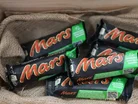

Chocolate bars are being locked in plastic security boxes in shops across the UK as retailers and police issue warn that thieves are stealing items to order.
Sainsbury's has confirmed it has begun using boxes on products which are regularly targeted, with £2.60 bars of Cadbury Dairy Milk among the items being locked up.
According to the Association of Convenience Stores (ACS), chocolate was more recently being sold on by criminals and is now being targeted more frequently by prolific offenders. This trend has seen specific types of confectionery targeted for illegal resale in local markets.
Unilever has signed a five-year partnership with Google Cloud to accelerate its digital transformation through advanced AI and platform capabilities. The collaboration has significant implications for how consumers discover and purchase food and drink brands.
It could reshape the future of the fast-moving consumer goods (FMCG) sector as shopping journeys become increasingly agent-driven.
The agreement focuses on building an enterprise-wide, AI-first digital backbone on Google Cloud. It includes deploying tools such as Vertex AI and Gemini.

Danone's latest annual financial performance could suggest a broader transformation taking place across the dairy sector.
The company's high-protein range, which includes Oikos, GetPRO and HiPRO, continued to deliver double-digit growth throughout 2025, even as the wider yogurt portfolio was characterised as a "work in progress."
According to Chief Executive Officer Antoine de Saint-Affrique, growth in North America was largely driven by the "winning momentum" of high-protein products, which helped compensate for weaker performance in other dairy categories.
These top-line numbers, however, mask a more complex supply chain narrative.
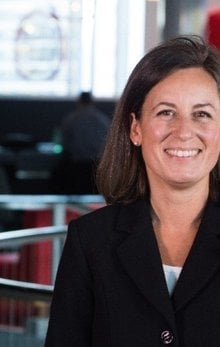
Antonia Wanner, Chief Sustainability Officer at Nestlé, has secured ninth place in Sustainability Magazine's Top 250 Sustainability Leaders 2026.
The recognition highlights her contributions to advancing circularity through reusable and recyclable packaging solutions, alongside her leadership in regenerative agriculture programmes.

As much as 60% of global GDP relies on dependable access to water, which means that water use efficiency represents one of the most crucial variables for water-stressed regions. These pressures appear most acutely in the food, beverage and agriculture sectors, which account for approximately 70% of global freshwater consumption.
The rapid growth of AI also contributes to water scarcity – by 2030, it is projected that AI will require as much water as the annual drinking water supply of the US. According to Ecolab, companies have a significant opportunity to reduce, reuse and recycle water to protect the environment and natural resources.
Company portals






Executives

Antoine de Saint-Affrique
CEO
Antonia Wanner
Chief Sustainability Officer
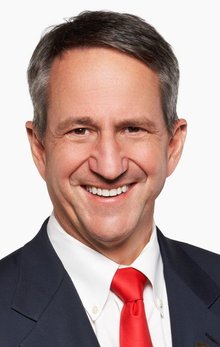
Christophe Beck
Chairman and CEO

Emilio Tenuta
Senior Vice President and Chief Sustainability Officer at Ecolab
Shane Grant
Deputy CEO of Danone Americas

Sherry Madera
CEO
Tara Brady
President, Google Cloud for Europe, Middle East and Africa

Willem Uijen
Chief Supply Chain and Operations Officer