Trade, Water & Nutrition: This Week in Food & Drink


Danone has revealed its intention to purchase Huel, a UK meal replacement firm, as the company seeks to strengthen its position within the functional nutrition sector.
The acquisition, valued at US$1.2bn, represents a significant development in Danone's Renew Danone Strategy, a framework aimed at delivering sustainable profitable growth.
Antoine de Saint-Affrique, CEO of Danone, has outlined his vision to merge the capabilities of both organisations, bringing together Huel's product portfolio and digital expertise with Danone's international presence and nutritional knowledge.
"Combining [Huel's] range and best-in-class digital capabilities with Danone's global reach and deep nutritional expertise offers exciting opportunities into the new and fast-growing nutritionally complete space, in line with our Renew Danone Strategy," Antoine says in a press release.
"We look forward to learning from one another and unlocking new opportunities and growth for both businesses."
Each year on 22 March, World Water Day highlights the critical role that fresh, safe water plays in communities worldwide.
Coinciding with World Water Day 2026, PepsiCo has confirmed the successful completion of two key water-related targets set for 2025.
The achievements form part of the company's broader pep+ (PepsiCo Positive) sustainability framework, which seeks to embed sustainable practices at the heart of its operations.

One principle remains constant: money drives momentum.
As global trade adapts to decarbonisation, deforestation-free pledges and human rights diligence, finance is emerging as a decisive force behind sustainability outcomes.
Once confined to small-scale pilots, sustainability-linked loans (SLLs) and green credit facilities are now reshaping corporate behaviour across essential supply chains.
Demonstrating this shift, COFCO International and Standard Chartered have finalised a US$435m sustainability-linked revolving credit facility aimed at strengthening responsible agricultural practices in South America.
This partnership represents the first publicly announced SLL in the region’s agricultural sector focused solely on social and resilience objectives – showcasing how financial innovation can drive transformation from the ground up.
The EU and Australia have announced a significant security and defence partnership, strengthening their close relationship amid ongoing geopolitical uncertainty. At the heart of this collaboration lies a finalised Free Trade Agreement (FTA) that could reshape food supply chains and open new markets for agricultural producers across both regions.
The deal also includes opening formal negotiations on Australia's association with Horizon Europe, which can help to further the country's research and innovation capabilities in areas including food technology and sustainable agriculture.
"After eight years of negotiations, Australia and the European Union have signed a landmark trade deal," says Anthony Albanese, Australian Prime Minister.
The FTA was finalised at a leaders' meeting between President of the European Commission, Ursula von der Leyen, and the Prime Minister of Australia, Anthony Albanese, which took place in Canberra. For food producers and exporters on both sides, this agreement could mean unprecedented access to new consumers and markets.

Google replenishes billions of gallons of water through nature-based projects and smart technology to support communities and ecosystems worldwide.
Approximately 90% of Google's water withdrawal goes towards cooling servers in its data centres, a demand increasingly driven by AI. To address this, the company has committed to replenishing 120% of its freshwater consumption on average across its facilities by 2030.
For World Water Day 2026, Google has shared an update on its progress towards replenishing freshwater in its local communities. This effort supports its broader commitment to advance responsible water use as demand for digital services continues to rise.
Company portals



Executives
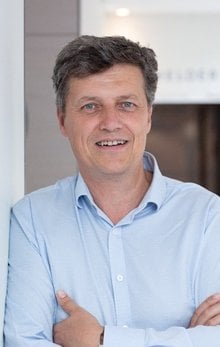
Antoine de Saint-Affrique
CEO
James McMaster
CEO
Jim Andrew
Chief Sustainability Officer, EVP and Executive Committee member
Kate Brandt
Member Board of Trustees

Marisa Drew
Chief Sustainability Officer

Roberta Barbieri
VP of Water & Climate
Tara Varghese
Global Water Stewardship Lead
Ursula von der Leyen
President