
How Has PepsiCo Achieved its Water Replenishment Targets?
Each year on 22 March, World Water Day highlights the critical role that fresh, safe water plays in communities worldwide.
Coinciding with World Water Day 2026, PepsiCo has confirmed the successful completion of two key water-related targets set for 2025.
The achievements form part of the company's broader pep+ (PepsiCo Positive) sustainability framework, which seeks to embed sustainable practices at the heart of its operations.
PepsiCo's water achievements
The first target PepsiCo has met involves replenishing 100% of water consumption across all company-owned facilities situated in high water-risk watersheds. In practice, this could mean that for each litre of water the company uses at these locations, an equivalent volume – or greater – is returned to natural water sources within the watershed.
The company achieves this through various initiatives, including nature-based conservation projects, wetland restoration programmes, water infrastructure development and efforts to improve on-farm irrigation efficiency. These approaches ensure water is returned effectively to local ecosystems.
The second accomplishment centres on implementing the Alliance for Water Stewardship (AWS) Standard across all owned manufacturing sites in high water-risk areas globally. The AWS Standard represents a voluntary framework designed to help businesses measure and manage their water consumption more effectively.
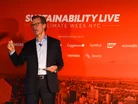
Jim Andrew, Chief Sustainability Officer at PepsiCo, says: "Water is foundational to our business and the communities where we operate.
"Reaching these goals shows what is possible when business strategy, local expertise and global partnerships come together.
"This is pep+ in action: delivering real impact for people and ecosystems while building long-term business resilience."
Local projects drive replenishment
Throughout 2025, PepsiCo maintained over 60 active initiatives that collectively replenished nearly 29 billion litres of water into local watersheds.
These programmes are developed with local leadership and community involvement, with a focus on enhancing overall watershed health.
The projects have enabled PepsiCo to meet its water replenishment target by returning, restoring or preserving water volumes drawn from high-risk regions.
Each initiative is tailored to local conditions and needs.
According to the company, these efforts have contributed to improved ecosystem health, strengthened community resilience and advanced sustainable water management practices.
The impact extends beyond PepsiCo's operations to benefit entire communities.
PepsiCo's initiatives operate in water-stressed regions around the world, spanning locations such as the US, Dominican Republic, Egypt, Spain and Turkey.
These diverse geographical locations require customised approaches to water stewardship.
Alliance for Water Stewardship adoption
PepsiCo became a member of the Alliance for Water Stewardship in 2018, setting itself the objective of adopting the AWS Standard at all company-owned manufacturing facilities in high water-risk regions by the close of 2025.
The company has indicated that it views the Alliance as a platform for advocacy, working to ensure freshwater resources in high-risk locations remain accessible to all.
The implementation of AWS Standards has been driven by cross-functional teams of PepsiCo employees, who collaborate to identify local water risks and assess opportunities for integrating water stewardship practices.
This collaborative approach ensures comprehensive water management strategies.
The AWS framework provides a structured methodology for companies to understand their water use impact.
It enables organisations to develop site-specific action plans that address local water challenges effectively.
Roberta Barbieri, Global Vice President, Sustainability – Climate and Water at PepsiCo, says: "Water is a fundamental human right, and yet water scarcity remains a significant global challenge, affecting millions around the world.
"We aim to lead in responsible water stewardship and we're proud of what we've accomplished so far. But the work doesn't stop here.
"As we look ahead to 2030, we'll continue striving towards our ambitions – to be Net Water Positive and to live up to our vision that wherever we operate, water resources are more sustainable and more resilient because of our presence."
Sustainability, procurement and supply chain leaders won’t want to miss Sustainability LIVE: The US Summit, taking place at Navy Pier, Chicago, on April 21–22.
Co-located with Procurement & Supply Chain LIVE, the event unites senior decision-makers at a time when supply chains, sustainability and business performance are more interdependent than ever.
Secure your place now for The US Summit – group booking discounts available.
Looking towards 2030
Third-party verification has confirmed PepsiCo's water milestones, with these achievements reinforcing the company's progress towards its broader pep+ objectives. Moving forward, PepsiCo will concentrate on its 2030 targets, which include an expanded watershed replenishment goal.
This expanded objective aims to replenish 100% of water used not only in high water-risk PepsiCo facilities but also in franchise bottler manufacturing sites back into local watersheds. Additionally, the company aims to enhance water-use efficiency across its high-water risk locations and franchise bottler operations.
These targets contribute to an overarching ambition to provide 100 million people with safe water access through various initiatives, partnerships and business strategies. The company recognises that water security is essential for sustainable business growth.
Jim Andrew writes on LinkedIn: "This is the result of executing a shared vision, taking the time to understand what works locally across every high water-risk area where we own manufacturing operations and applying best practices and nature-based solutions to reduce water stress and support communities.
"It's about conserving and protecting water both inside our facilities and across watersheds that impact many. It's working alongside farmers, conservationists and governments to strengthen shared resilience.
"As we look ahead to our 2030 ambitions and aiming to fulfil our vision to be Net Water Positive, we'll keep pushing, so that wherever we operate, water resources are more sustainable and resilient because of our presence."
Company portals

Executives
Jim Andrew
Chief Sustainability Officer, EVP and Executive Committee member

Roberta Barbieri
VP of Water & Climate