
Danone: Cutting Methane in African Dairy Supply Chains
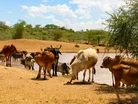
Danone positions procurement as the starting point for building low-emission dairy supply chains across Africa.
The company’s approach connects sourcing decisions with climate goals, farmer support and long-term infrastructure development, as it targets a 30% cut in methane emissions from fresh milk by 2030.
Methane remains a key issue in dairy emissions, particularly from livestock waste.
Danone responds by embedding climate action into its sourcing model. It moves beyond farm-level guidance to build a procurement strategy that influences how suppliers operate, which technologies they adopt and how data is used to track results.

Procurement as a climate tool
In Danone’s dairy operations, fresh milk accounts for 70% of all dairy-related emissions.
To reduce this, the company built a Dairy Methane Action Plan centred around supplier engagement and emissions tracking.
Procurement acts as the entry point, aligning supplier contracts with emission-reduction goals.
A cornerstone of this strategy is Danone’s 2025 agreement with Sistema.bio. Under this partnership, 6,500 smallholder farmers across Africa gain access to biodigesters by 2030.
These systems convert livestock manure into biogas and fertiliser, cutting methane emissions while adding value to farm operations.
Othmane Essaker, a Moroccan dairy farmer supported through the programme, explains: “The biodigester technology... allows us to use the processed liquid as natural fertiliser in our fields dedicated to cereals and legumes or fodder mix, and it has shown extremely positive results.”
By integrating such tools directly into procurement frameworks, Danone makes environmental outcomes part of the supplier’s operational responsibility.
Digital platforms like the Cool Farm Tool enable data collection and emissions tracking, so that suppliers can meet agreed performance targets.
Danone’s methane reduction results reflect this alignment. As of 2024, the company achieves a 25.3% cut compared to its 2020 baseline.
Procurement becomes more than a supply activity, it becomes the lever through which climate progress is delivered.
Strengthening supply chains from farm to factory
Procurement also supports wider supply chain resilience. In African markets like Nigeria and Morocco, where smallholder farmers are key to milk production, Danone uses sourcing agreements to strengthen infrastructure and farmer capabilities.
In Morocco, Danone operates “Hlib Bladi,” a programme designed to stabilise milk supply and boost supplier performance.
The initiative links procurement with cold-chain investment, farmer training and digital systems.
Farmers receive training on feed management, herd health and manure practices.
Milk collection centres are upgraded with cold storage and tracking tools, which reduce spoilage and ensure consistent milk quality.
Danone reports that participating farmers have seen income increases of 50% as a result.
In Nigeria, Danone continues to invest in dairy infrastructure despite economic uncertainty.
Procurement contracts serve as platforms for longer-term development, with support for milk collection systems, traceability tools and quality improvements built into the agreements.
These investments help Danone ensure consistent input quality while also supporting smallholder livelihoods, aligning commercial and sustainability outcomes.
Partnership-led sourcing aligned with global goals
Danone extends its procurement impact through partnerships that align suppliers with international standards.
The company co-founded the Dairy Methane Action Alliance and enters into agreements such as its Memorandum of Understanding with Sistema.bio.
More than 82% of Danone’s dairy volume now comes from suppliers signed up to the Sustainable Dairy Partnership.
This platform connects procurement requirements with the Science Based Targets initiative, requiring suppliers to commit to shared climate goals and report emissions data.
Suppliers also receive support to meet these requirements.
Danone funds training on feed optimisation, improved manure management and genomic testing to enhance herd performance.
This structure creates mutual accountability across the supply chain.