
2SFG: Backing British Farmers for Poultry & Food Security
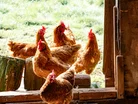
Global food security faces mounting pressure as undernourishment increases worldwide. According to the UK Government, poverty, conflict, climate change and food distribution contribute to rising hunger levels.
The UK food sector now works to cut emissions while building stronger domestic supply chains and protecting food security. High animal welfare standards remain a priority across the industry.
Animal feed represents a key opportunity for change. Imported soy linked to deforestation and high carbon intensity creates environmental challenges that require immediate attention.
2 Sisters Food Group has released a detailed roadmap addressing these issues through its NextGen Strategy. The plan sets out measurable emissions cuts, investment in British agriculture and changes to poultry feed formulation to support a net zero target by 2035.

Land conversion protections expanded
The strategy includes an expanded deforestation-free commitment extending beyond traditional industry pledges. The company will extend premium payments to South American soymeal farmers covering all land conversion, not just deforestation.
This approach could protect ecosystems including native grasslands and support biodiversity.
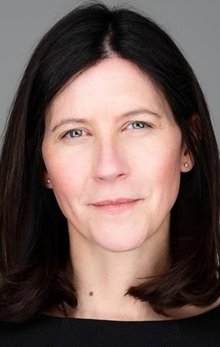
"This is a transformation moment for British poultry," says Kate Stein, Group Director of Quality, Sustainability and Agriculture at 2 Sisters Food Group.
"By going beyond deforestation-free standards and backing British farmers, we're making a meaningful commitment to both the environment and animal welfare - building a sustainable, resilient food system for the future as part of our NextGen Strategy."
The company will source from farms where no deforestation or land conversion has occurred for more than 18 years. This could reduce greenhouse gas emissions associated with land use change.
From July 2026, this approach targets a 70% cut to the carbon footprint of soymeal used across all poultry feed, including higher welfare chicken. The reduction could mark a substantial step toward lowering Scope 3 emissions.
British ingredients replace imports
Alongside global sourcing commitments, the company accelerates a move toward domestic feed ingredients. Nearly a quarter of imported soymeal has been replaced with British-grown oilseed rape and beans.
The company purchases 150,000 tonnes annually from UK farmers.
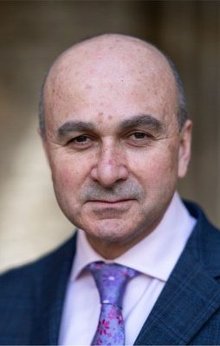
"Compassion in World Farming firmly believes in the rigorous pursuit of improvements to the welfare of farmed animals and the health of our planet," says Philip Lymbery, Global CEO of Compassion in World Farming.
"Never in our history has it been more urgent to build a resilient, sustainable food system with animal welfare at its heart. This is a great step forward by 2 Sisters Food Group and clearly shows that higher welfare and sustainability can go hand in hand.
"This demonstrates truly disruptive leadership, showing it is possible to make significant progress with speed."
According to 2 Sisters Food Group, this represents a £50m (US$68m) injection into British agriculture. The investment could support rural economies while strengthening national food security.
Over the past 30 years, the gradual incorporation of British ingredients has already reduced the carbon footprint of a 2 Sisters chicken by 15% compared with a standard soymeal based diet.
The transition also benefits 46,000 hectares of farmland through improved soil health, reduced reliance on artificial fertilisers and increased support for pollinators.
Teresa Garcia-Moore PhD, Engagement Manager at AFi, says: "Aligning with the Accountability Framework, which is backed by the consensus of 20+ environment and human rights organisations, helps ensure that buying commodities sourced from sensitive ecosystems is not contributing to deforestation or land conversion."
According to the company, the latest changes could reduce emissions by almost 670,000 tonnes. This equates to a reduction of more than 20% in Scope 3 emissions.
Higher welfare production advances
The strategy includes a clear regional milestone at the Coupar Angus facility in Scotland.
The company plans to completely remove soymeal from chicken feed at this site by the end of 2027.
"M&S fresh chicken is 100% RSPCA Assured and our Oakham Gold chicken is exclusively supplied by 2SFG: this latest move to more sustainable feed is a strong example of the innovative initiatives our supplier partners are rolling out to adapt farming practices to support the environment, whilst backing British farmers," says Alex Freudmann, Managing Director of M&S Food.
"The M&S Plan A for Farming supports long term resilience for farmers and switching to British-grown feed for chickens will support a wider network of growers in the UK as well as the journey to net zero."
British-grown peas, seeds and beans will replace soymeal at the facility. This demonstrates how local sourcing can fully replace imported protein in certain operations.
The transition aligns with the company's position as one of the largest producers of higher welfare chicken in Europe.
All chickens meet Red Tractor standards, with 80% kept at lower stocking densities.
A notable proportion meets Better Chicken Commitment requirements, including the use of slower growing breeds.
"Co-op only sells and uses 100% British chicken and it's good to see further investment from our long-term partner, 2SFG, into UK agriculture so together we can make meaningful change," says Matt Hood, Group MD, Co-op Food.
"British farmers are the backbone of the domestic food supply chain and, as an industry, it is imperative we build its resilience, alongside global supply chains, to maximise sustainability for now and the future."
By integrating low carbon feed across all operations, the company aligns welfare and sustainability goals.
This could enable the expansion of higher welfare production while delivering measurable environmental gains in line with the Accountability Framework initiative.
Company portals



Executives
Alex Freudmann
Managing Director
Kate Stein
Group Director of Quality, Sustainability and Agriculture

Matt Hood
Managing Director
Philip Lymbery
Global CEO

Teresa Garcia-Moore
Engagement Manager