
What is Carlsberg's Sustainable Brewing Strategy?

As a leading global brewing company, Carlsberg is embedding sustainability into its corporate strategy focusing on key areas of the food and drink value chain.
Carlsberg's efforts centre on reducing plastic waste through packaging redesign and enhancing recycling, while also supporting a transition towards regenerative agriculture for its raw materials.
Its science-based targets have been verified in line with the 1.5°C level of the Paris Agreement.
Carlsberg launched its enhanced ESG programme, Together Towards ZERO and Beyond (TTZAB), which sets out its 2030 targets and introduces a new objective for 2040.

Decarbonising the brewing process
Carlsberg's ZERO Carbon Footprint ambition includes a goal of achieving zero carbon emissions at its breweries and securing a 30% reduction in its value chain emissions by 2030.
Its long-term target is to achieve net zero carbon emissions across its entire value chain by 2040.
To reach these goals, Carlsberg is working to decarbonise its thermal energy usage by converting boilers from natural gas to renewable thermal fuels or electrification.
Carlsberg also ensures any additional renewable electricity is sourced from on-site generation or procured through Power Purchase Agreements.
Peter Hammarstedt, CEO of Carlsberg Sweden, says: “We are constantly working to take concrete steps towards a more sustainable business.”
This approach targets the direct environmental impact of its brewing operations a critical area for any beverage producer.
Carlsberg’s goal is to have 100% recyclable reusable or renewable packaging by 2030.
To achieve this, it is designing its packaging to contribute to a circular economy and using bio-based materials.
This involves working across the value chain to introduce alternatives to fossil fuel-based plastics and collaborating with suppliers to increase the recycled content in its packaging materials.
Innovations in sustainable beverage packaging
A collaboration with packaging manufacturer DS Smith has led Carlsberg to develop a new multipack design for testing in Poland.
The design features rounded corners for its bottles, which reduces the need for shrink film on pallets transporting the drinks.
According to DS Smith, its multipack design helps to avoid damage reduces empty space in the box by 4.2% and makes the box 17% lighter.
The packaging, which is also fully recyclable, is being trialled by Carlsberg Poland for its Carlsberg, Garage and Somersby beer product ranges.
This change in design is expected to save more than 200 tonnes of CO₂ annually for Carlsberg in Poland.
Simon Boas Hoffmeyer, VP Sustainability and ESG at Carlsberg, says: “Our performance in 2024 is due in large part to the long-standing commitment to our ESG agenda and our focus on creating impact through partnerships and collaborations.
"A prime example is in the area of packaging. We could not achieve a 76% collection and recycling rate of our bottles and cans without years of hard work in industry-wide partnerships for efficient deposit return schemes and recycling infrastructure across our markets.”
Regenerative agriculture in the beverage supply chain
Carlsberg has started the transition to regenerative agriculture practices in key European markets, including Denmark, France, the UK and Finland.
This initiative supports Carlsberg's ZERO farming footprint ambition by expanding its sourcing of regenerative raw materials.
The aim is for 30% of its raw materials to be grown using regenerative agricultural practices by 2030 and 100% by 2040.
These materials include all malt, barley, wheat, rice, sugar, hops and corn crops.
The reduction in farming emissions is expected to come from lower fuel usage due to low or no tilling and reduced fertiliser usage from healthier soils.
To promote this change, Carlsberg is formalising its principles of regenerative agriculture, mapping its supply areas and engaging with suppliers to integrate new agriculture requirements into its procurement processes.
In the UK for example, Carlsberg is working with farmers to brew Carlsberg Danish Pilsner with 100% regenerative barley by 2027.
Company portals

Executives
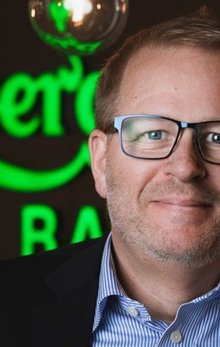
Peter Hammarstedt
CEO, Carlsberg Sweden
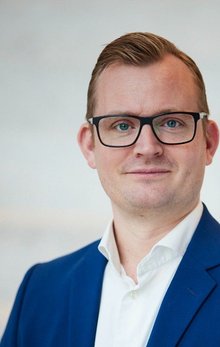
Simon Boas Hoffmeyer
VP, Global Head of Sustainability and ESG