
WEF: Why CEOs Should Prioritise Sustainable Food Sourcing
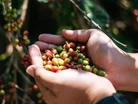
As organisations grapple with the need to evolve, guidance from the World Economic Forum (WEF) could provide a framework for navigating these complexities.
In collaboration with Bain & Company, WEF has released a report outlining how Chief Executives might address sustainability imperatives and protect the longevity of food supply chains.

Emphasising sustainable sourcing
A recently published whitepaper entitled 'First Movers Coalition for Food: CEO Lessons for the Future of Food Procurement' examines the procurement approaches that could help tackle food supply chain challenges globally.
Drawing on detailed Chief Procurement Officer (CPO) interviews and case studies, the report illustrates how Chief Executives might leverage their procurement frameworks to navigate supply chain vulnerabilities.
Food supply chains were constructed with continuity as a foundation, yet recent developments have revealed how vulnerable that continuity can be.
Climate volatility, uncertain economic conditions, geopolitical friction and escalating consumer expectations mean global food supply chains are experiencing unprecedented strain.
Organisations face intensifying demands to evolve, with expectations for both resilience and sustainability increasing continuously.
Consequently, procurement leaders must take a more calculated approach to their sourcing decisions, recognising that their selections and methodologies will influence future stability.
"Proven solutions, from regenerative farming practices in row crops to water management and lower-methane approaches in rice, are ready to expand. Yet too many fail to move past the pilot stage," say Børge Brende, President and CEO of World Economic Forum and Ramon Laguarta, Chairman and CEO of PepsiCo.
"Often, what's missing is bold demand-side leadership: strong, credible buying commitments that unlock finance, align value chain partners and give farmers the confidence to invest.
"These approaches can be successful if they are accompanied by consistent dialogue with suppliers and farmers. The lessons outlined in this paper show that understanding their needs, recognising their challenges, supporting relevant services, building relationships and improving soil resilience are all integral to the future of food supply."
The First Movers Coalition for Food (FMC for Food) comprises 60 prominent food-system organisations, including 26 significant buyers with combined revenue approaching US$1tn.
The coalition aims to reshape food procurement by disseminating insights and validated pathways for implementing optimal procurement practices to build food supply chain resilience.
All supply chain, sustainability, Scope 3 and net zero leaders should attend:
-
Sustainability LIVE: The Net Zero Summit - QEII Centre, London, March 4-5
-
Sustainability LIVE: The US Summit - Navy Pier, Chicago, April 21-22
Co-located with Procurement & Supply Chain LIVE, these events brings together CSOs, ESG leaders and senior decision-makers at a moment when sustainability, supply chains and commercial performance are increasingly interconnected.
Tickets can be booked online today for The Net Zero Summit and The US Summit. Group discounts available.
Evolving system requirements
Currently, the food system supports more than 40% of employment worldwide and represents approximately 10% of global GDP.
Recent volatility has threatened this contribution, with both external disruptions and inherent system weaknesses creating instability.
While industrialised agriculture has facilitated demand fulfilment through enhanced productivity, it has simultaneously contributed to system fragility by driving resource depletion, climate change and biodiversity decline.
- Nestlé sourced 21.3% of ingredients from farmers using regenerative agricultural practices in 2024
- PepsiCo sourced 66% of its key ingredients from sustainable sources
- 80% have near[term absolute or intensity-based scope 3 reduction targets
- 75% have committed to deforestation-free supply chains
- More than 50% have set regenerative agriculture targets
According to the WEF report, agrifood systems generate nearly 30% of global emissions and agriculture accounts for 90% of tropical deforestation, alongside 70% of global freshwater withdrawals.
Increasingly frequent disruptions are destabilising supply networks through both yield impacts and price volatility.
Throughout 2025, coffee prices remained near 50-year peaks as drought conditions affected major producing nations.
Brazil, which contributes approximately 40% of global supply, experienced harvest failures, whilst Vietnam recorded a 20% production decline in 2024.
Persistent weather uncertainties are rendering production increasingly challenging and unpredictable.
The imperative to satisfy immediate consumer demand has proved detrimental to long-term food supply chain sustainability and resilience
Presently, government, investor and consumer priorities are evolving, with growing expectations centred on sustainable agriculture.
To concurrently minimise environmental footprint whilst enhancing organisational reputation, procurement teams must recalibrate their strategies and embrace more sustainable methodologies.
Company portals




Executives
Børge Brende
President and CEO
Ramon Laguarta
Chairman of the Board of Directors