Walmart's Green Goals: Progress & Pitfalls for the Grocer

In 2005, a speech by Walmart's then CEO, Lee Scott, established a new benchmark for corporate sustainability in the retail sector.
Two decades on, an examination of Walmart's journey reveals clear progress in some areas but highlights the profound challenges that remain, particularly concerning the products on its shelves.

Scott's address from Walmart's Arkansas headquarters committed Walmart to three ambitious environmental goals: powering 100% of its operations with renewable energy, creating zero waste and selling products that sustain both people and the environment.
These targets were forward-thinking for their time, set a decade before the Paris Agreement. His successors have stayed the course, making good progress towards these foundational commitments.
Progress in energy and waste management
According to Walmart's latest ESG report, renewable sources now account for 48.5% of Walmart's global electricity needs. The report also notes that its Scope 1 and 2 emissions have seen an 18.1% reduction from a 2015 baseline.
Walmart has also made notable headway on its second target, with Walmart now diverting 83.5% of its global waste from landfill and incineration. While these figures show movement, critics point to Walmart's considerable growth, arguing that its environmental progress could be faster.
The sustainable product conundrum
The third goal, focusing on the sustainability of products sold, has proven to be the most complex challenge. This is particularly true for a retailer with a vast and intricate food and grocery supply chain.
Jon Johnson, a Professor at the University of Arkansas's Walton College of Business, offers a critical assessment. "I would give them an A or A-minus on their waste and energy goals. I give them a C on their product goals, and that would be a generous C," he says.
Jon was a Co-Founder of The Sustainability Consortium, an organisation created to develop metrics for evaluating product impacts.
He suggests the information gathered was not fully leveraged. "Walmart never used that information to make procurement decisions at any scale that had the effect we were hoping it would," he says.
This difficulty was acknowledged by Matt Kistler, Walmart's second Chief Sustainability Officer. He explained the initial approach may have been too broad, and that "we should have been more focused."
Industry-wide influence on sourcing
Despite falling short on some of its own targets, Walmart's sustainability initiatives have acted as a catalyst for change across the retail and consumer goods industries.
Elizabeth Sturcken, Vice President at the Environmental Defense Fund, highlights the retailer’s 2017 chemical footprint goal as a key example of its influence. "You got very real ripple effects throughout the entire industry," she says, pointing out that competitors went on to introduce similar commitments.
Ken Cook, President of the Environmental Working Group, described how a 2014 campaign by his organisation led Walmart to mandate that its suppliers limit certain priority chemicals, creating "landscape-level changes".
However, Walmart continues to face scrutiny. Its Scope 3 emissions, which are those originating from the supply chain, have risen by approximately 4% in the last two years. Concerns also persist over traceability related to deforestation and packaging goals that rely on voluntary supplier actions.
Current Chief Sustainability Officer, Kathleen McLaughlin, defends Walmart's strategy: "We're not a perfect company. The easier things have been tackled. We're now in the throes of true system transformation, and that's hard work."
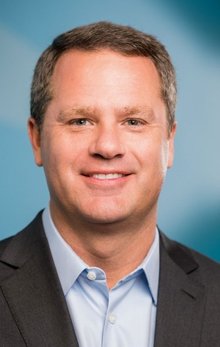
This sentiment is echoed by current Walmart Chief Executive Officer Doug McMillon, who reflects on the foundation laid by Lee Scott: "His courage and vision set Walmart on a path that continues to shape how we serve today."
Company portals

Executives
Doug McMillon
President & CEO
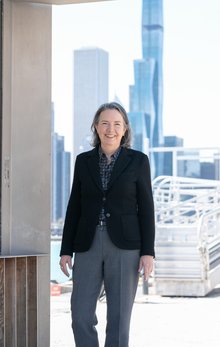
Kathleen McLaughlin
Board Chair