
Q&A: Mondelez Pushes Sustainable and Circular Chocolate
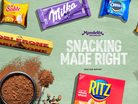
Mondelēz International, one of the world's largest food and drink's manufacturers, is pushing forward with an ambitious sustainability agenda that aligns with its purpose to help people snack right.
The Chicago-based business is looking to turn its global commitments into local delivery, focusing on sustainable sourcing, lower-carbon operations, circular packaging and waste reduction.
In the UK, Joanna Dias leads this work, embedding environmental goals into strategy, budgets and performance while simultaneously driving progress across the firm's manufacturing, logistics and product design wings.
With a background in responsible sourcing and circularity, Joanna is the perfect person to explain how Mondelēz is evolving its approach to create more sustainable chocolate at scale. In this Q&A, she lifts the lid on how to achieve truly sustainable snacking.
What is Mondelēz doing to ramp up its sustainability?
One of the most tangible examples where we are advancing our efforts in the UK is on our packaging.
Globally, 96% of our packaging is now designed to be recyclable and we’re on track to reach 98% by 2025 – ahead of our 2030 goal.
In the UK, we’re leading several pilots that support this ambition including the launch of 300,000 paper Cadbury Heroes tubs, which we’re currently rolling out exclusively with Tesco.
This is the first time Cadbury has offered paper tubs in the UK and it’s a huge step forward in our long-term ambition to reduce virgin plastic across our portfolio.
The trial is part of our global Pack Light and Right strategy to reduce unnecessary packaging, use more recycled materials and improve recycling systems so our packaging can be collected, sorted and recycled in practice.
We’re also gathering feedback directly from shoppers via QR codes inside each tub to inform how we expand and refine future designs – a real example of innovation meeting practicality.
This initiative builds on other key milestones: Cadbury sharing bars are now wrapped in packaging with 80% International Sustainability and Carbon Certification (ISCC) standard recycled plastic, using around 600 tonnes of post-consumer recycled plastic annually.
Our Cadbury biscuit multipacks now use paper-based outer packaging, saving another 145 tonnes of virgin plastic.
Also, from 2026, part of our Cadbury Mini Eggs range will be wrapped in packaging with 65% ISCC certified recycled plastic using around 100 tonnes of post-consumer recycled plastic a year.

These are meaningful, scalable changes that demonstrate how we can evolve even our most iconic products while maintaining the same great quality and experience consumers expect.
How can recycling and recycling infrastructure be improved?
Designing our packaging for recyclability is only part of the solution, we also continue to focus on ensuring the packaging of our products actually gets recycled.
We know consumers want to recycle more, but the UK’s fragmented infrastructure, regional variations and inconsistent labelling creates confusion.
One of the ways we’re helping to address this is through the Flexible Plastic Fund, FlexCollect project.
It’s the largest pilot for household collections and recycling of flexible plastic packaging ever undertaken in the UK, partnering with 10 local authorities and 160,000 participating households.
We believe real progress will come from greater collaboration between brands, government and recycling providers to provide simpler, more consistent systems nationwide; and we’re focused on playing our part in testing and scaling what works.
Why and how is packaging changing to meet sustainable demand?
Packaging design is evolving faster than ever as consumer expectations change.
We know that consumers want packaging that has a lower impact on the environment yet still delivers on quality, convenience and enjoyment – and they expect brands like Cadbury to lead the way in making sustainable choices simple and accessible.
Our approach is to design with consumers, not just for them.
That means balancing recyclability with practicality – ensuring products stay fresh, safe and easy to enjoy.
For example, the Cadbury Heroes paper tub trial isn’t just a packaging change; it’s an opportunity to understand how people interact with paper packaging and whether it fits seamlessly into their everyday lives.
We also see packaging as a communication tool.
Through QR codes and on-pack messaging, we can help consumers understand how to recycle and make informed choices.
It’s about creating packaging that’s both functional and educational.
We’re also collaborating with industry and our suppliers to scale solutions that work across the entire system.
Looking ahead, we continue to invest in industry partnerships like the Flexible Plastic Fund, of which we are a founding member and innovate to help build more circular packaging solutions.
How else is Mondelēz reducing its environmental impact?
While packaging is a major focus, our sustainability work goes well beyond this, spanning how we source ingredients through to decarbonising our operations and reducing our emissions.

For example, in the UK, six of our production sites have been using 100% purchased renewable electricity since 2021 and we continue to explore more opportunities in this space.
Globally, we’re making measurable progress.
We’ve reduced our end-to-end CO2e emissions by 12% compared to our 2018 baseline and cut food waste from internal manufacturing sites by 30%.
We’ve also advanced the sustainable sourcing of key ingredients like cocoa, wheat and dairy – partnering with farmers to adopt regenerative and deforestation-free practices, promote bio-diversity and lower-carbon farming, as well as investing in renewable electricity, energy-efficient technologies and cleaner logistics across our global network.
By advancing our sustainability goals, we’re not only reducing our impact, we're strengthening our business for the long term.
Company portals
Executives

Joanna Dias
UK Sustainability Lead