
Ball & Beiersdorf: Is PCR Aluminium the Future of Packaging?
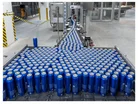
Aluminium has long ranked among the world’s most efficient circular materials, endlessly recyclable without any degradation in quality.
Recycling aluminium uses about 95% less energy than producing it from raw materials, and an estimated 75% of all aluminium ever made remains in use today. This extraordinary material efficiency is now advancing the next wave of sustainability in consumer goods.
As both brands and consumers refocus on closed-loop packaging and the circular economy in personal care, Beiersdorf and Ball Corporation have achieved a major milestone: transitioning all of Beiersdorf’s European aerosol cans to 100% post-consumer recycled (PCR) aluminium.
“This achievement reflects our belief in the infinite potential of aluminum to drive a world free from waste,” says Victoria Marletta, VP Commercial, Personal & Home Care at Ball Corporation.
“It’s proof that sustainability and commercial success can go hand in hand – and it supports our global commitment to reduce absolute emissions by 55% by 2030.”
100% recycled aluminium aerosols
The partnership between Ball and Beiersdorf started in 2024 with a pilot project to test the production and performance of aerosol cans made solely from recycled aluminium. After proving successful, the initiative quickly expanded across Europe in 2025.
Today, many of Beiersdorf’s best-known products – including NIVEA MEN Deo sprays and selected 8x4 ranges – now come packaged in fully recycled cans.
“This is more than a packaging innovation, it’s a bold step toward true circularity and fully supporting our Sustainability Agenda,” adds Kelvin Oecksler, R&D Global Packaging Development at Beiersdorf AG.
“We want to reach Net Zero by 2045 and for this, we must embed solutions that are a true win – not only for our planet, but also for our consumers and our business. Our strategic cooperation with Ball delivers very well into that.”
Why circularity matters
For Beiersdorf, the move brings a measurable reduction in packaging-related emissions, directly advancing its ambition to reach net zero by 2045.
For Ball, it underscores its leadership in sustainable aluminium packaging and technical excellence in lightweighting, showing how innovation and circular systems can operate at full commercial scale.
Ball Corporation, a global leader in aluminium packaging with 16,000 employees across more than 70 sites, generated US$13.16bn in net sales in 2025. Beiersdorf, headquartered in Hamburg, Germany, employs more than 22,000 people and recorded €9.9 billion (US$11.35 billion) in 2024 sales from its trusted global brands, including NIVEA, Eucerin and La Prairie.

More than a shared success, the partnership sends a strong signal to the wider industry: circular packaging is both achievable and commercially sound. By working together across the value chain, companies like Beiersdorf and Ball are reshaping packaging standards, meeting sustainability goals without compromising on design or consumer experience.
Ball has already rolled PCR recycling out for food and drink packaging, which of the company's partners will be next to hit the 100% landmark?
Company portals

Executives
Kelvin de Oliveira Oecksler
Senior Packaging Specialist
Maria Victoria Marletta
Commercial Vice President, Aerosol Packaging