
How will the Deliver-E Coalition Electrify Deliveries?
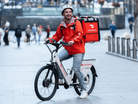
Some of the world’s largest food and grocery delivery companies have forged an alliance known as the Deliver-E Coalition to accelerate the transition to electric two and three-wheeler vehicles.
This initiative targets the reduction of urban emissions generated by the rapidly growing delivery logistics sector.
The coalition's founding members include Delivery Hero, DoorDash, iFood, Mr D, Swiggy, Uber, Wolt and Zomato. Collectively, these firms operate across 96 countries and are responsible for an estimated six billion deliveries annually using two- and three-wheelers.
The group has pledged to move its delivery fleets towards zero-emission alternatives, such as electric bikes and mopeds, by leveraging shared knowledge and collaborative planning.
Industry leadership and collaborative action
The initiative represents a major joint effort to address environmental concerns within the delivery industry.
The United Nations Environment Programme (UNEP) is providing support, with its Industry and Economy Division Director, Sheila Aggarwal-Khan, endorsing the coalition's approach.
“Deliver-E is industry leadership in action,” explains Sheila. “Zero-emission two- and three-wheeler vehicles are ready to scale: they are cleaner, quieter, and increasingly cost-effective. Through Deliver-E, companies will share what works and move faster together than any one company could alone.”
UNEP’s Global Electric Mobility Programme will serve as the coalition’s Secretariat, managing its governance, facilitating collaboration among members and publishing progress reports.
This structure connects the delivery platforms with a broader network of policymakers, financiers and equipment manufacturers.
Responding to rising emissions and costs
The formation of Deliver-E addresses both environmental factors and the operational issues associated with the global e-commerce boom.
E-commerce in 43 economies generated US$25tn in 2021 alone, marking a 15% increase from pre-pandemic levels and fuelling a sharp rise in last-mile deliveries.
This growth places urban delivery logistics under intense scrutiny. According to a UN study, without intervention, emissions from delivery services in the world’s top 100 cities could climb by over 30% in the coming years.
The same study predicts a 14% rise in congestion and a 12% increase in related healthcare costs.
The coalition’s charter commits members to “dramatically speed up the implementation of zero-emission deliveries by shifting to electric vehicles, bicycles and other means of zero-emission two- and three-wheeler deliveries, thereby unlocking economic, social and environmental benefits for all stakeholders and the wider society".
Studies backed by UNEP indicate that moving from petrol-powered two-wheelers to electric bikes could lower last-mile delivery costs by approximately 25% and reduce emissions by nearly 90%.

A framework for fleet electrification
The Deliver-E Coalition is focused on operational execution to establish electric fleets as the standard for local delivery.
The core of its strategy is to create “a platform for knowledge exchange” where companies “share learnings and expertise for an industry-wide electrification effort".
This involves exchanging data on vehicle performance, charging infrastructure and fleet management to develop scalable transition plans.
The charter also outlines the need for a network of partners, including technology providers and public sector bodies, to help overcome common challenges.
“Members shift to zero-emission deliveries to contribute to reducing greenhouse gas emissions, reducing air and noise pollution, enhancing the resilience of the livelihoods of drivers, and accelerating the wider electrification of mobility and transportation,” the Coalition Charter states.
Consumer preference is another key factor. Surveys suggest that over 70% of shoppers favour sustainable delivery choices, presenting both a logistical hurdle and a brand opportunity for delivery firms.
By pooling their resources and creating a shared evidence base, the coalition members aim to align industry capabilities with market demand for cleaner and quieter urban logistics.
Company portals



Executives

Sheila Aggarwal-Khan
Director of the UN Environment Programme (UNEP)’s Industry and Economy Division