
Stella McCartney: Material Innovation in the Supply Chain
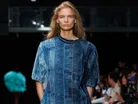
Fashion house Stella McCartney is leveraging material innovation to reshape its supply chain, offering a potential blueprint for other industries including the food and beverage sector.
The brand’s SS26 collection at Paris Fashion Week was reportedly crafted from 98% sustainable and 100% cruelty-free materials, demonstrating how advanced technology can be integrated into sourcing and production to meet environmental targets.
A key innovation showcased was denim treated with PURE.TECH, a technology designed to capture air pollutants.
This integration of functional technology into everyday materials offers a parallel for the food industry’s development of functional foods and sustainable packaging.

The technology can be added to fabric surfaces or directly into materials, where it uses photocatalysis and catalysis to absorb pollutants like carbon dioxide and convert them into inert particles. According to PURE.TECH, the application can capture over 2,000 ppm of CO₂ within 10 hours.
Integrating functional technology into textiles
The process involves treating fabrics so that pollutants are absorbed as air passes over them and later released as harmless byproducts through friction.
This is not the brand's first use of air-purifying materials, which could suggest a consistent strategy of using its products as tools for environmental improvement.
Aldo Sollazzo, CEO of PURE.TECH, explained the origins of the technology.
“When we first began exploring advanced textiles through the competition Reshape nearly a decade ago, the aim was to integrate design, material technology and advanced manufacturing into the industry,” he says on LinkedIn.
He adds, “We believed in design not just as a matter of aesthetics, but as a tool for reshaping material intent, environmental awareness and technology integration. Seeing PURE.TECH woven into Stella McCartney’s beautiful garments is a dream realised and a step toward a reshaped industry led by innovation and sustainability.”
Sourcing novel plant-based alternatives
The collection also featured FEVVERS, a plant-based alternative to feathers. The development of new vegan materials presents supply chain challenges, including investment in and validation of new technologies. This mirrors the journey of many food companies working to scale plant-based food alternatives.
The inclusion of FEVVERS in a major runway show highlights a commitment to sourcing and scaling these novel materials.
James West, Co-Founder of FEVVERS, comments on the material's debut: “Somehow we’ve found ourselves at Paris Fashion Week watching garments made with FEVVERS walk the runway at the Centre Pompidou in Stella McCartney’s SS26 show."
"To say that’s surreal doesn’t come close," he adds. "The fact that someone of Stella’s standing has endorsed what we’re doing at this stage is epic."
Stella McCartney told FEVVERS: “The innovation is just insanely beautiful, and we have created some of the most striking couture pieces I have ever seen. It’s not only the world’s first plant-based feather alternative, but it’s also proof that brands that continue to use feathers are choosing cruelty over creativity.”
Embedding circularity in supply chain strategy
The brand’s sustainability focus is also evident in its approach to circularity. The SS26 show included items like jeans, shoes, and bags made from upcycled denim waistbands, a practical application of circular design. This strategy builds on a longer history of initiatives aimed at reducing waste and using recycled content.
Since 2016, the brand has used recycled cashmere exclusively, stating this has cut the fibre's environmental impact by 92%. It also utilises ECONYL regenerated nylon, which is sourced from waste fabrics and fishing nets.
Furthermore, the brand has lined its handbags with fabric made from recycled water bottles since 2012.
In its Winter 2024 collection, Stella McCartney introduced tote bags with an Airlite finish, a coating that breaks down pollutants, reinforcing the brand's ongoing exploration of functional sustainable technologies.
These long-standing practices could show a mature strategy for embedding circularity into its sourcing and manufacturing, offering valuable insights for any C-level executive looking to build more resilient and sustainable supply chains.
Company portals

Executives

Stella McCartney
Founder