
Molson Coors: Showing How Drinks Industry Can Be Sustainable
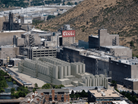
Molson Coors operates one of the world's most extensive beverage businesses, which means that both its supply network and carbon emissions are substantial.
The North American corporation – home to brands such as Coors and Carling – has launched a far-reaching sustainability programme spanning from farms to bars in a bid to reduce its environmental footprint.
The company's detailed 'Our Imprint' initiative represents a comprehensive transformation of its business practices, with ambitious objectives that demonstrate both its global scale and dedication to environmental responsibility.
Molson Coors' sustainability roadmap
Molson Coors first introduced its Our Imprint initiative in 2017 and refreshed it three years later in 2020. The strategy encompasses numerous objectives across various timescales, with several due for assessment this year.
The programme centres on two fundamental pillars – People and Planet – whilst its environmental work concentrates on four key domains:
- Carbon reduction
- Water stewardship
- Sustainable packaging
- Responsible agricultural sourcing
The company has deliberately structured its targets to match the UN's Sustainable Development Goals, and the Science Based Targets initiative has validated its emission reduction plans, verifying they satisfy the rigorous criteria outlined in the Paris Climate Agreement's 1.5C trajectory.
How Molson Coors is addressing its carbon emissions
The beverage manufacturer has established challenging carbon reduction objectives.
The company aims to achieve a 50% reduction in absolute carbon emissions from its direct operations and a 20% decrease in supply chain emissions against 2016 baseline figures by the close of 2025 – milestones already reached in its UK operations during the 2024 fiscal year.
These objectives span the organisation's complete value chain, with packaging materials (representing roughly 38% of the company's overall carbon footprint) receiving particular focus through a specific 26% reduction target.
Renewable energy investment has played a crucial role in Molson Coors' strategy.
The company's Wisconsin operations, for instance, now utilise renewable electricity via programmes such as We Energies' Renewable Pathways, making it the programme's inaugural subscriber.
The company is also actively modernising its production facilities, with its Golden, Colorado site serving as a prime example. The facility's advanced equipment is projected to cut energy consumption by as much as 30% whilst preserving millions of gallons of water annually.

Water conservation, packaging waste and sustainable agriculture
Water conservation represents a critical obligation for beverage corporations of Molson Coors' magnitude.
The company has set a target to enhance water use efficiency at its major brewing facilities by 22% relative to 2016, aiming for a water-to-product ratio of 2.8 hectolitres per hectolitre.
Multiple facilities, including its Trenton, Ohio and Fort Worth, Texas breweries, have either met or are nearing this standard.
The company has also pledged to remove single-use plastic rings from all its North American manufacturing sites.
This US$85m commitment, revealed in 2022, is converting four- and six-packs to sustainably sourced, recyclable cardboard packaging.
The transition, set for completion by year-end, positions Coors Light as North America's largest beer brand to implement such a change.
Molson Coors is additionally pursuing 100% sustainable sourcing for its barley and hops.
Via programmes like the Molson Coors Growers Group in the UK, which encompasses over 140 farmers, the company collaborates with agricultural partners on improving water efficiency, soil health and biodiversity.
The company has developed the 'Grower Direct Portal' in the US to accelerate this objective, enabling farmers to share field-level information about agricultural practices whilst allowing Molson's team to track combined progress.
How Craig Woodburn is guiding Molson Coors' sustainability efforts
Craig Woodburn oversees the company's sustainability initiatives all throughout Europe, the Middle East, Africa and Asia-Pacific.
With professional experience across industry, government and consultancy, plus specialist knowledge in the circular economy, carbon management and supply chain sustainability, Craig exemplifies leadership in this field.
Following his arrival at the company in 2024, he has emphasised the critical role of data collection and supplier engagement in reaching the organisation's ambitious targets.
"Data collection, accuracy and availability is a key priority for us and our suppliers and customers," he says.
"Data provided by our suppliers will improve visibility of the trajectory needed to ensure we achieve net zero across our value chain by 2050."
His emphasis on Molson Coors' supply chain reflects the principle that sustainability reaches far beyond brewery operations.
- Interested in hearing more about this topic from Craig himself? Join us at Sustainability LIVE: The Net Zero Summit in London on 4-5 March 2026 for in-depth discussions with leading sustainability experts including Craig himself. Secure your ticket now and save over £200.
Company portals

Executives

Craig Woodburn
Sustainability Director