How Cargill is Building Sustainable Farming Supply Chains

From its beginnings in 1865 as a single grain warehouse, Cargill has grown into a global business inside the agricultural supply chain.
Cargill now has a presence in 70 countries and a workforce of around 155,000 people engaged in its operations and supply network.

Cargill’s 2025 Impact Report outlines Cargill's sustainability goals across three main areas:
- Climate
- Land and water
- People
The strategy is designed to deliver advantages by cutting emissions, improving soil health, strengthening farmer livelihoods and promoting food security.
Cargill set goals to lower its absolute operational Scope 1 and 2 greenhouse gas emissions by 10% by 2025 and to cut Scope 3 emissions from its worldwide supply chain by 30%.
According to its 2025 progress report, Cargill has achieved a 20.9% reduction in Scope 1 and 2 emissions from its 2017 baseline, surpassing its target.
Investment in supply chain efficiency
Cargill has directed significant capital towards its sustainability objectives.
The company has invested US$69m in efficiency and other sustainability-related capital projects within its operations and a further US$110m into local communities globally.
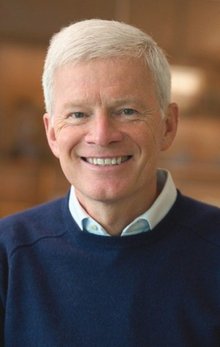
Brian Sikes, Chief Executive Officer at Cargill, says: “As a company committed to nourishing the world, we’re helping address the most complex and urgent challenges facing people and the planet.
"Our work remains grounded in the same values that have guided us from the very beginning: we do the right thing, we treat people with dignity and respect and when challenges arise, we reach higher to deliver solutions.”
Securing the cocoa and chocolate supply chain
As the world’s second-largest producer of cocoa and chocolate, Cargill has a particular focus on protecting its cocoa supply chains.
Cargill sources cocoa directly from five nations: Brazil, Côte d’Ivoire, Ecuador, Ghana and Indonesia.
A key challenge is land use change from cocoa cultivation, which accounts for about 66% of Scope 3 emissions in Cargill's cocoa and chocolate supply chains.
To address this, Cargill is supporting farmers with adaptation and conservation efforts to combat deforestation and the impacts of climate change.
Cargill advocates for responsible agricultural methods including forest protection, restoration and agroforestry.
We’ll continue building a food system that is more sustainable, more resilient and better prepared to nourish the world for generations to come.
It also encourages traceability, allowing individual cocoa deliveries to be tracked to the farm plot of origin.
By using satellite data, Cargill actively monitors farms for any signs of deforestation.
These efforts have resulted in 14,800 farmers receiving education and applying agroforestry techniques to their cocoa farming and production.
Supporting farmers to ensure food security
Cargill also works to enhance farmer livelihoods globally.
The company aims to provide training on sustainable agricultural practices to 10 million farmers by 2030.
As of 2025, it has delivered 7.7 million training sessions since its 2017 baseline.
Through partnerships, Cargill works with farmers to improve the profitability and resilience of their farms while ensuring their inclusion in the supply chain.
The agricultural industry faces increasing pressures from climate change and market fluctuations.
Cargill assists farmers in managing these disruptions to fortify their operations and improve their access to necessary tools, training and markets.
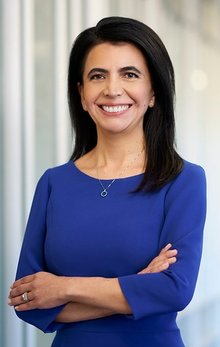
Pilar Cruz, Executive Vice President and Chief Sustainability Officer at Cargill, says: “In the past year, we advanced solutions to help farmers adapt, grow and succeed – while delivering measurable value to customers and strengthening the long-term resilience of the food system.
"Working in partnership across the value chain, we reached milestones that reflect both our ambition and action.
"Through these partnerships, we’ll continue building a food system that is more sustainable, more resilient and better prepared to nourish the world for generations to come.”
Company portals

Executives
Brian Sikes
Board Chair and CEO
Pilar Cruz
Executive Vice President, Chief Sustainability Officer and Head of Global Impact