Nespresso Boosts Benelux Fulfilment With ABB Automation
Nespresso, the Swiss coffee brand hailed for delivering direct to consumers, embraces automation to streamline how its Benelux customers receive their orders.
The company looks to uphold its reputation for quality service amid growing demand. To realise this, a more efficient, precise system to manage a wide variety of complex orders is necessary.
Working alongside logistics provider ID Logistics (IDL), Nespresso now uses a comprehensive automation solution powered by ABB.
Installed at the distribution centre in Tilburg, Netherlands, managed by IDL, the system includes robotic depalletising, high-speed picking and order packing, supported by 24/7 technical support and advanced software control.
“With Nespresso seeing continued growth in demand for its products, the company was keen to see how an automated order handling could help,” explains Dominic Maas, Site Manager at IDL.
Previously, IDL staff manually picked and packed coffee sleeve orders. As volumes rose, this method struggled to cope.
The new ABB-designed system enhances accuracy to 99.9% and boosts productivity by 200%, enabling up to 625 orders per hour.

Mechanics of the system
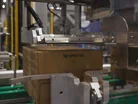
ABB's system functions in two coordinated stages: beginning with depalletising coffee sleeve boxes, followed by picking individual sleeves to build customer orders.
The process kicks off with ABB's IRB660 robot, handling depalletising duties. It selects needed boxes from any of 40 pallet spots and transports them to a conveyor. Subsequently, the boxes open automatically, revealing the coffee sleeves.
Next, ABB’s FlexPicker IRB 360 robots take control. Four of these delta robots manage the high-speed picking phase.
Each can access 10 coffee sleeve variants, achieving up to 150 picks per minute. They can lift up to five sleeves simultaneously, depositing them directly into customer order carts on a moving line. Each cart then approaches a packing station. There, an operator determines the appropriate box size. Coffee sleeves automatically enter the box, and the operator manually incorporates accessories like chocolates, seals the box, and applies the label.
ABB's material management software oversees this process. The system operates beneath Nespresso’s warehouse management, managing product and data flow.
It includes a SCADA (Supervisory Control and Data Acquisition) system that visualises key performance indicators, supporting operators in real-time.
“We chose the ABB system as it had the most innovative and convincing design to meet the project requirements,” adds Dominic.
“One thing that stands out is the pick and place mechanism while the conveyor is running. The ABB’s FlexPicker can pick one sleeve or multiple sleeves from the box and place them in the moving cart.”
Enhanced output and visibility
This leads to a nimble operation maintaining quality at scale. With automated checks and faster handling, errors shrink.
Customer complaints now represent just 0.06% of orders and the system’s flexibility allows it to adapt to changing order volumes seamlessly, using existing boxes and pallets.
Operators leverage an intuitive interface, alerting them to faults and suggesting solutions. The robot interface includes visual maps of system activity, improving response times to minor issues.
“We have been delighted with the system, which is increasing our agility and our ability to fulfil customer orders more efficiently with less errors,” says Sorin Geambasu, Global Warehouse Efficiency Manager at Nespresso.
Support persists even after installation as ABB trains IDL staff on adjusting operations and offers continual remote and on-site technical aid. Nespresso and IDL contemplate implementing similar systems in other locations.
The Tilburg site marks their inaugural application of the automation technology, significantly impacting service and output.
“This is the first time that such an innovative automated solution has been implemented for Nespresso,” concludes Sorin.
“We are always reviewing ways to improve customer satisfaction and automation has proven itself as a way of achieving this. We are now looking at how we can implement this type of solution in other facilities to better serve our customers in the future.”