
Heineken: Water Stewardship in the Beverage Industry
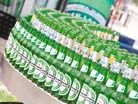
Heineken operates across more than 190 countries globally, establishing itself as a major beverage company with a portfolio comprising over 300 brands.
The brewing industry's operations can generate environmental impacts throughout the value chain, particularly concerning water usage and packaging waste.
Heineken's 2030 Brew a Better World strategy sets out its sustainability objectives and details how it intends to reduce emissions.
Heineken has been recognised as 51st in Sustainability Magazine's Top 250 World's Most Sustainable Companies 2025.

Heineken's sustainability strategy
Heineken introduced its Brew a Better World 2030 strategy in 2021.
The framework could address sustainability challenges Heineken may encounter whilst advancing towards a net zero, fairer and more balanced future.
Environmental objectives include achieving net zero carbon across the value chain by 2040.
Heineken aims to reach net zero Scope 1 and 2 emissions by 2030, whilst reducing Scope 3 FLAG (forest, land and agriculture) emissions by 30% and non-FLAG by 25% by 2030.
In 2024, Heineken recorded a 34% reduction in Scope 1 and 2 carbon emissions, a 23% reduction in Scope 3 FLAG emissions and an 11% reduction in Scope 3 non-FLAG emissions versus its 2022 baseline.
Joanna Price, Heineken's Chief Corporate Affairs Officer, says: "Four years into developing and executing our Brew a Better World 2030 strategy, sustainability and responsibility are now an integral part of how we operate.
"I am proud of the progress we've made but I know there is more for us to do as we navigate challenges and trade-offs.
"Brew a Better World remains the foundation as we continue to learn, evolve and partner with others to deliver our goals."
The beverage company is working to reduce its dependence on fossil fuels, targeting 100% renewable electricity for both on-site electricity generation and purchased electricity by 2030.
This could support Heineken's net zero targets, helping to improve its environmental impact.
Water stewardship across operations
According to UNICEF, four billion people experience severe water scarcity for at least one month each year, representing almost two thirds of the world's population.
Water stewardship represents a key focus for Heineken, particularly in agriculture, which comprises nearly 90% of Heineken's water footprint.
Heineken is working towards 100% sustainably sourced ingredients, including barley and hops, by reducing water use and treating wastewater from farming activities.
Heineken aims to fully balance its water use in water-stressed areas through implementing nature-based solutions such as land conservation and ecosystem restoration.
The target involves replenishing 1.5 litres of water to local watersheds for every litre of beer Heineken sells.
Sonia Thimmiah, Senior Director, Global Sustainability at Heineken, said on LinkedIn: "For Heineken, water is essential to our products: without water, there is no beer.
"By adopting a value chain approach, we aim to address water not only in our own operations but also within communities where we operate and upstream with our suppliers."
Interested in learning more about water sustainability? Join us at Sustainability LIVE: The Net Zero Summit in London on 4-5 March 2026 for in-depth discussions with leading sustainability experts. Secure your ticket now and save over £200.
Circular economy packaging transition
Packaging accounts for the largest share of Heineken's Scope 3 carbon emissions.
Heineken is working on transitioning to a circular economy to reduce its reliance on finite resources and decrease waste.
Heineken is committed to making 99% of its packaging fully recyclable by design by 2030.
This involves procuring packaging materials designed to fit into existing recycling streams, which could reduce waste to landfill by consumers.
To reach circularity goals, Heineken aims to increase the volume of closed-loop recycled content in packaging, which includes advocating for closed-loop recycling streams.
Heineken is collaborating with its value chain to create a stream of used beverage cans for suppliers, increasing the lifespan of products.
Reusable packaging is designed with a balance of convenience, attractive design and sustainability to appeal to customers whilst improving environmental performance.
Magne Setnes, Chief Supply Chain Officer at Heineken, said on LinkedIn: "Transitioning to a circular economy is a must if we plan to be here for many more generations to come.
"Our breweries around the world seek to recycle or even 'up-cycle' any by-products from their operations, such as, among others, brewers spent grain, yeast, paper, glass, etc., in order to not bring waste to landfill."
Join us for The Water Sustainability Summit panel at Sustainability LIVE: The Net Zero Summit in 2026. Secure your ticket now and save over £200 with our Early Bird offer.
Company portals
Executives
Joanna Price
Chief Corporate Affairs Officer
Magne Setnes
Chief Supply Chain Officer

Sonia Thimmiah
Senior Director Global Sustainability